Artistic Research / Material + Computational Study
Skin of Writing
Embodied Writing as Material Trace
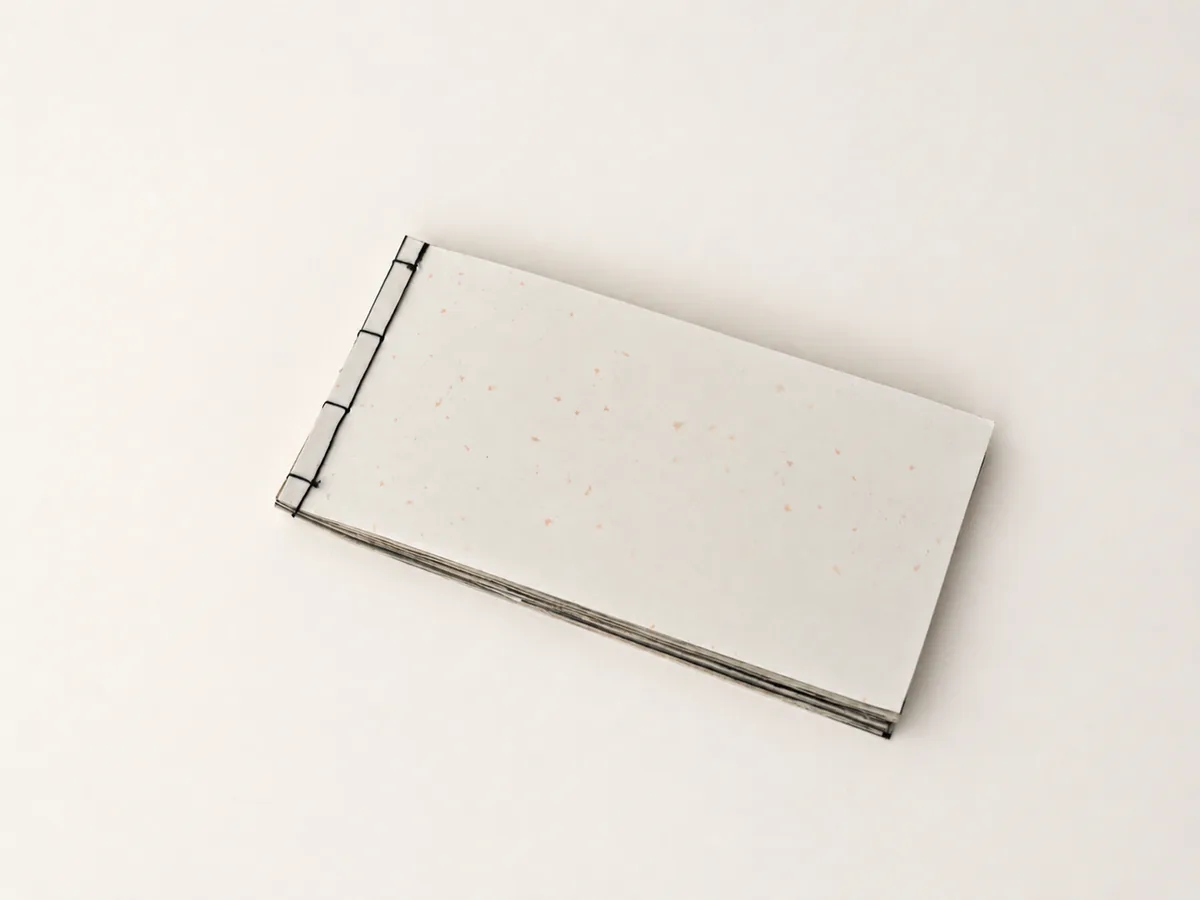
A research project in two linked experiments: a hand-bound artist book developed from calligraphy learning, and a computational study of what static traces reveal or conceal about embodied writing.
Experiment / 01
Completed workThe Book
Material Translation
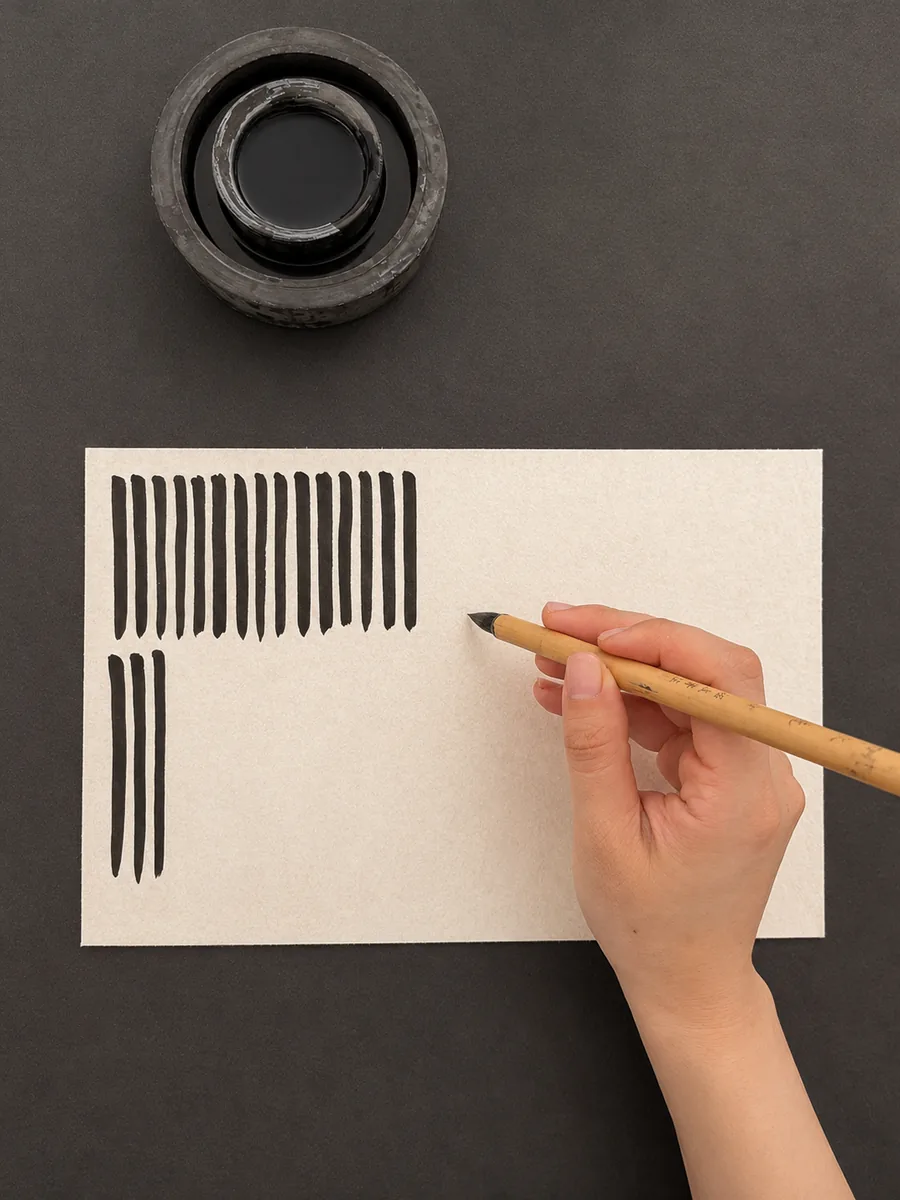
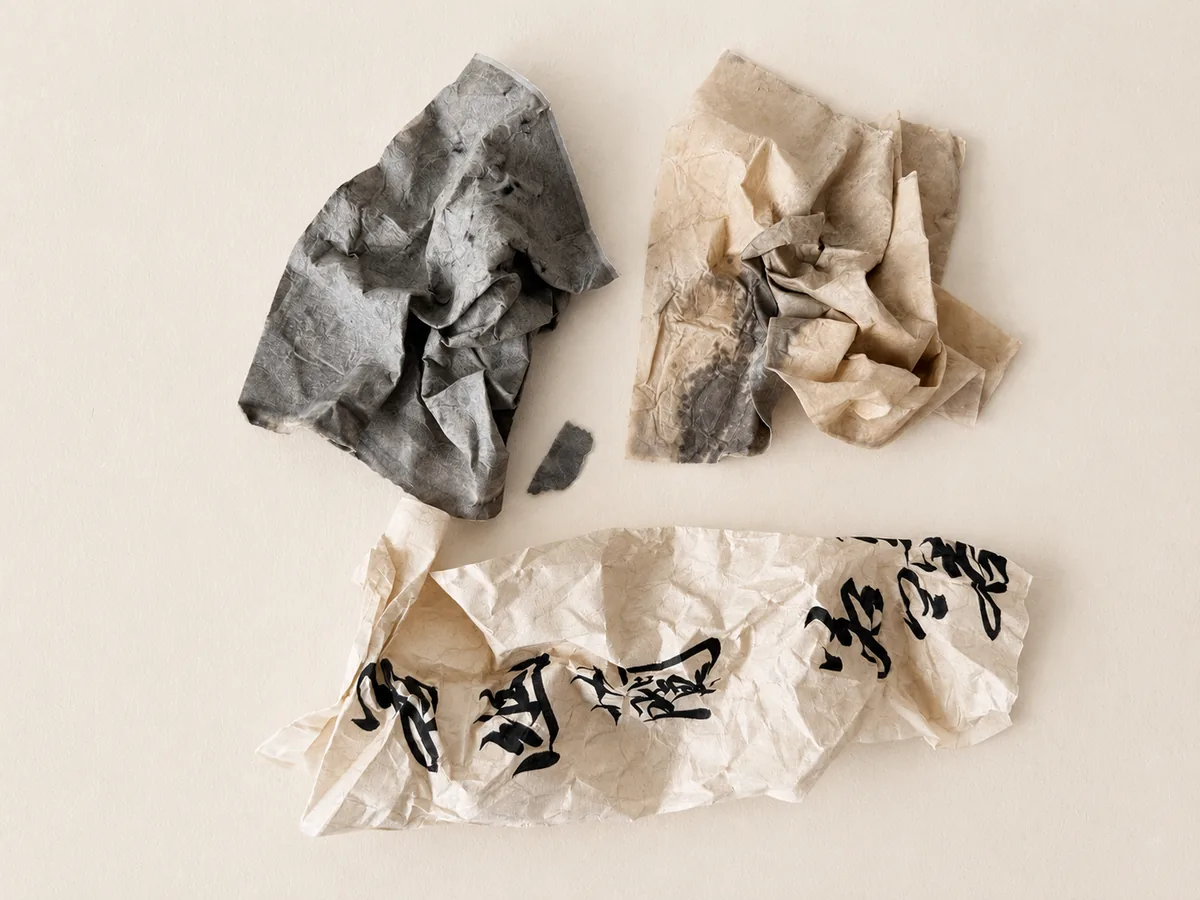
The project starts from ordinary practice residues: repetition, correction, pressure changes, and incomplete attempts. The residue is not treated as waste but as data for memory.
After interruption, the hand was able to recover timing, wrist relation, and pressure transitions before language could recover them as clear instructions. This shift from “I remember by saying it” to “the body remembers in action” is the core turn of the study.
Skin of Writing grew from a calligraphy practice begun in 2025. After pausing for two to three months, I returned to the brush and found that movements I could no longer fully explain were still present in my hand. The mind had forgotten parts of the instruction, but the body remembered how to begin, turn, press, lift, and move at speed.
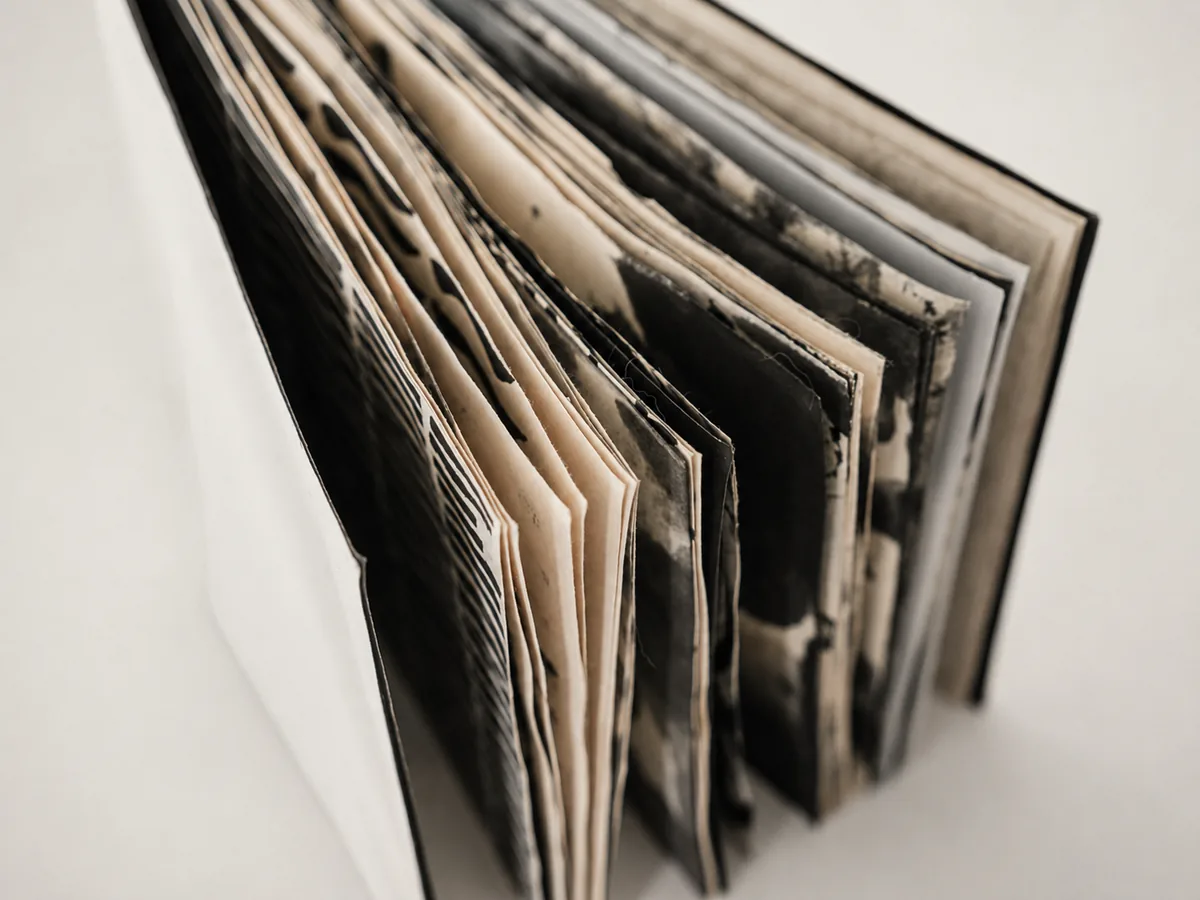
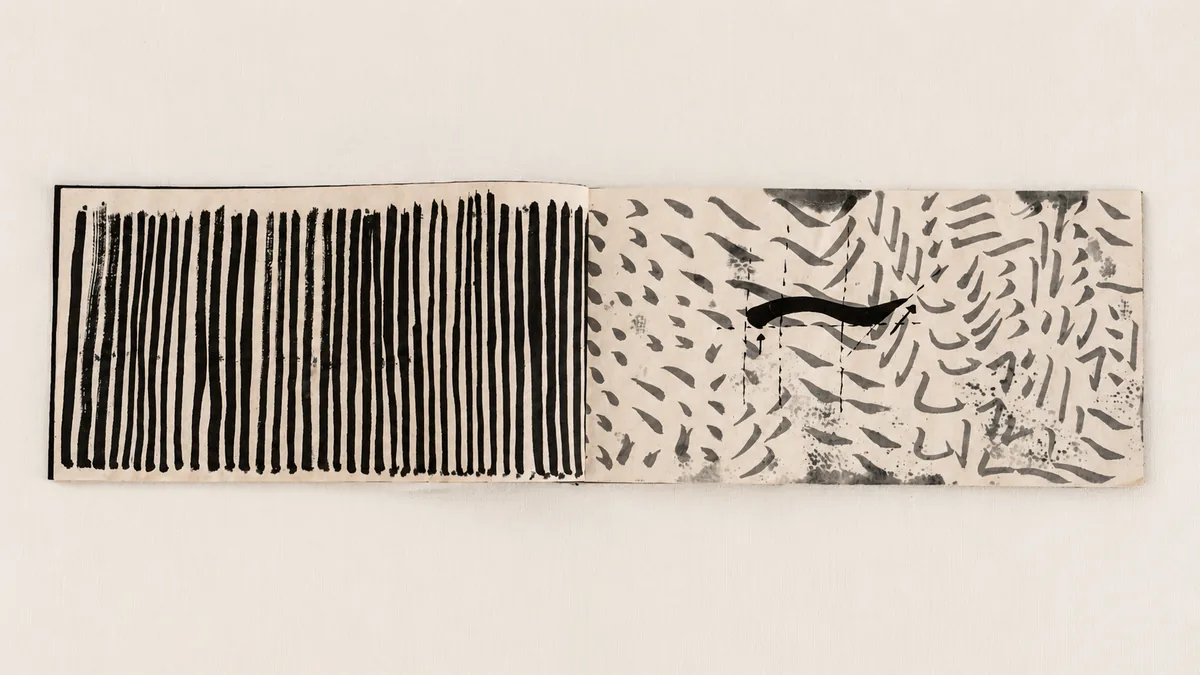
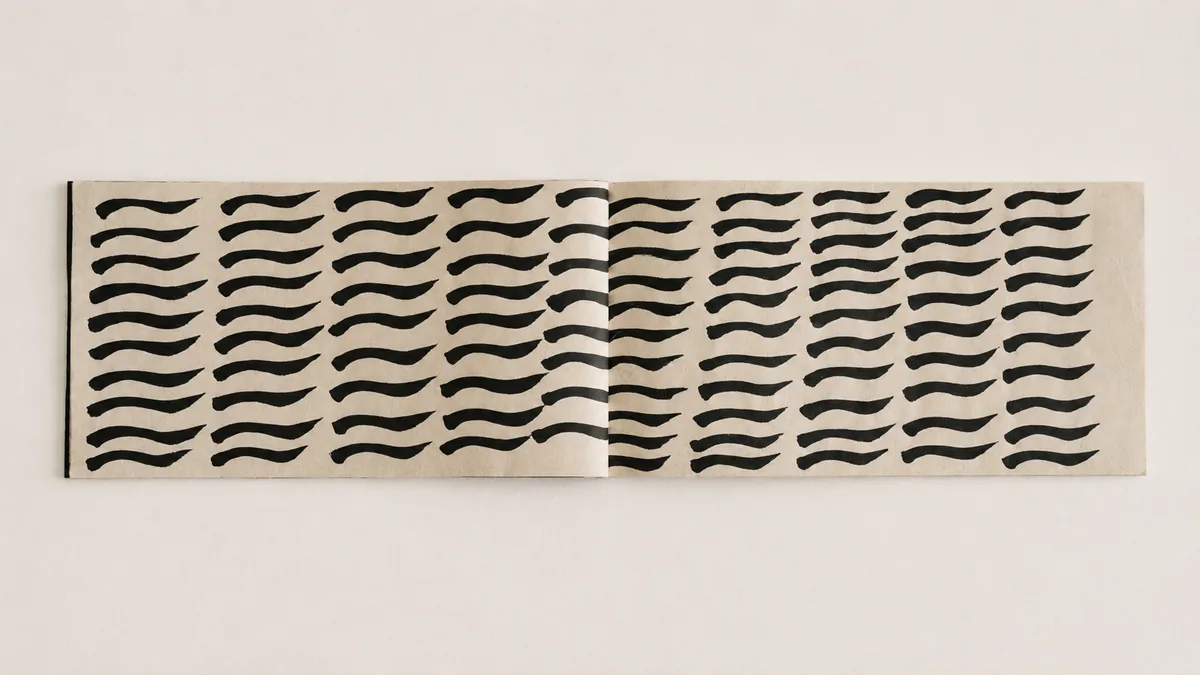
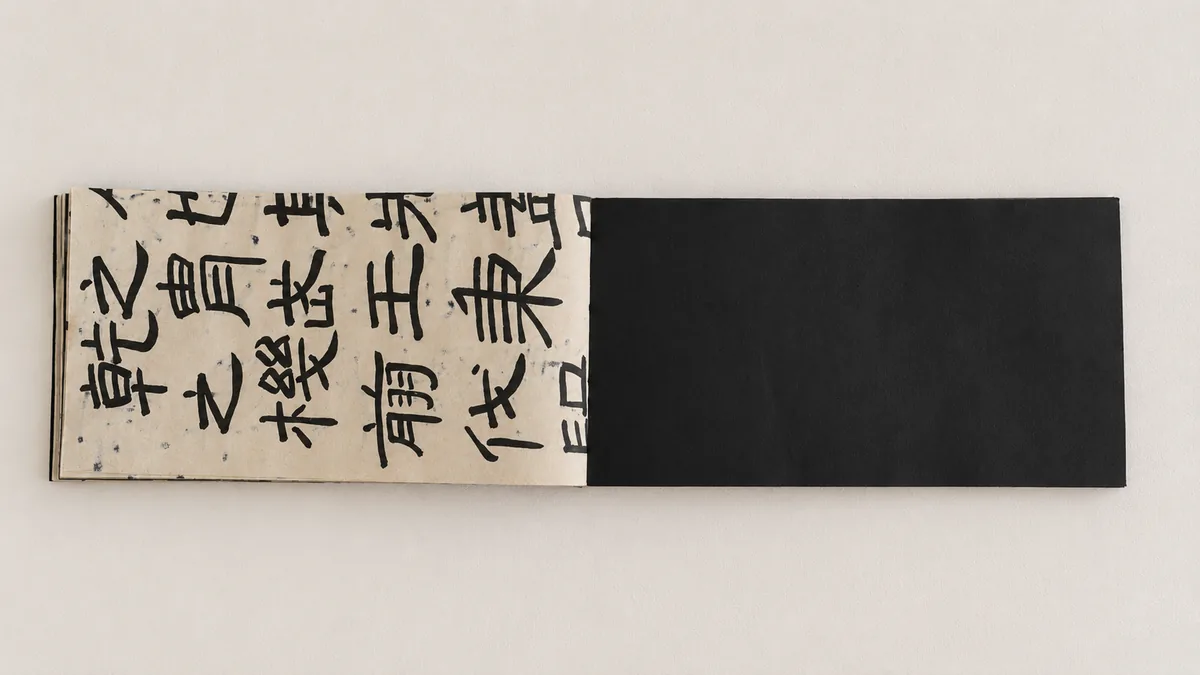
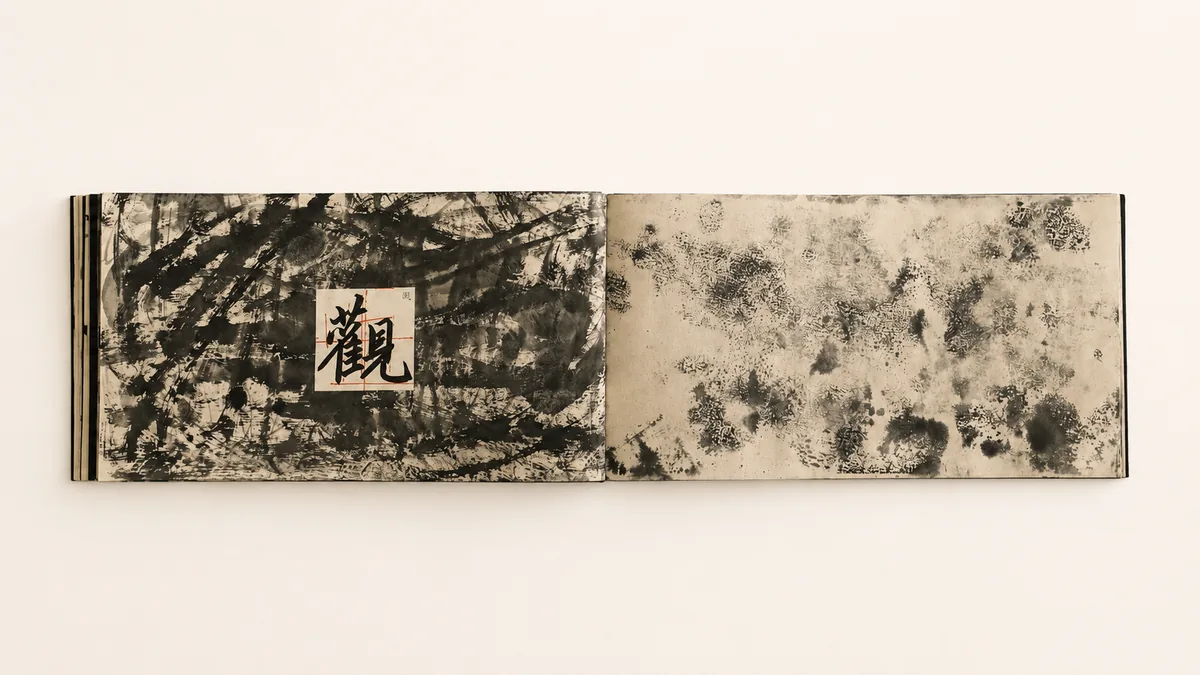
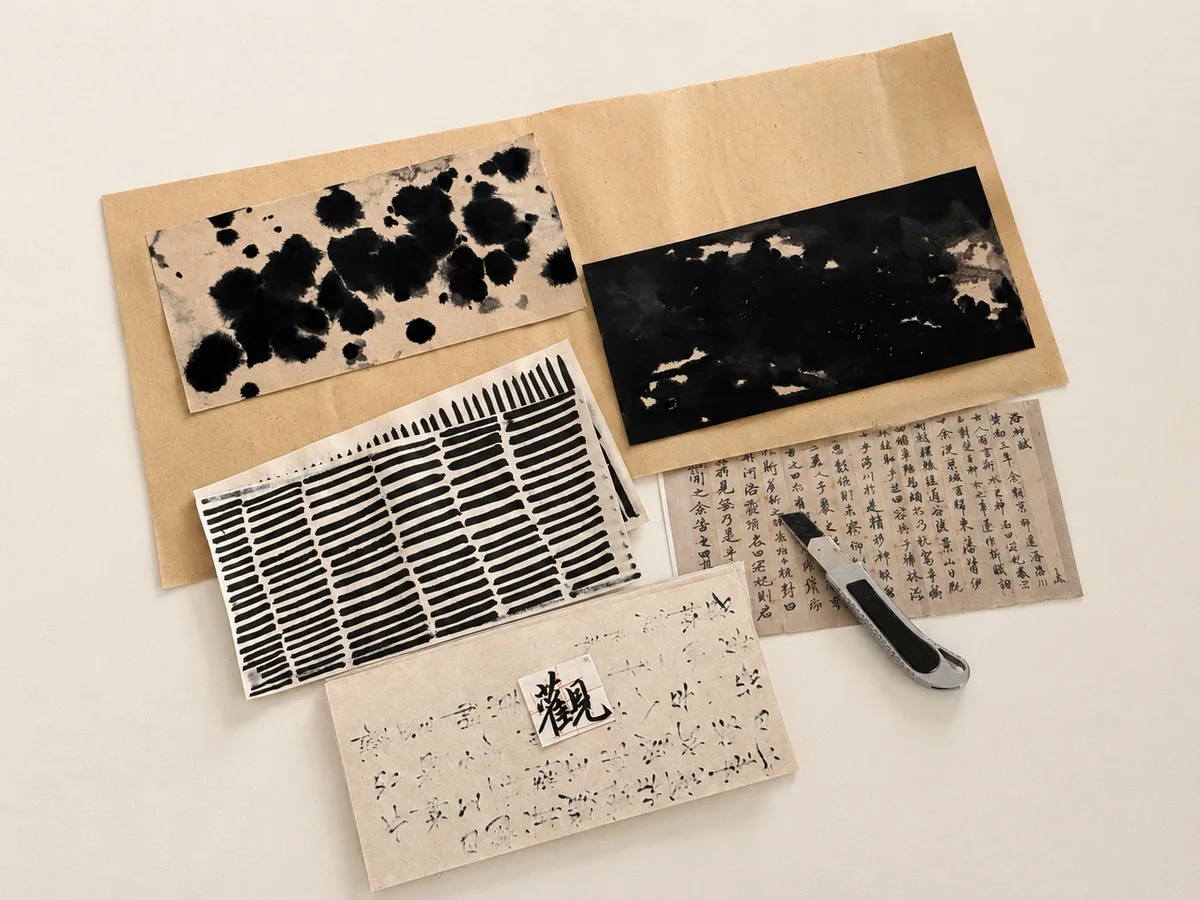
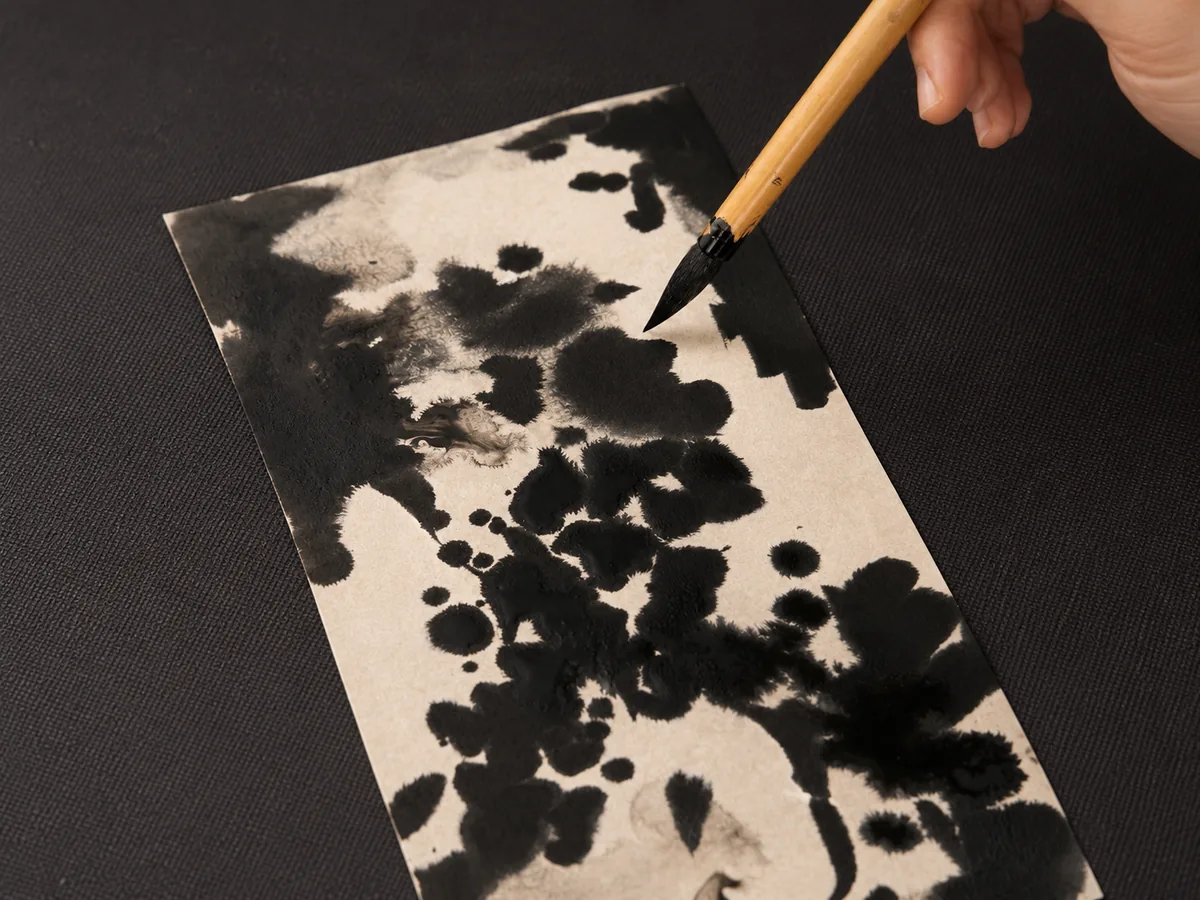
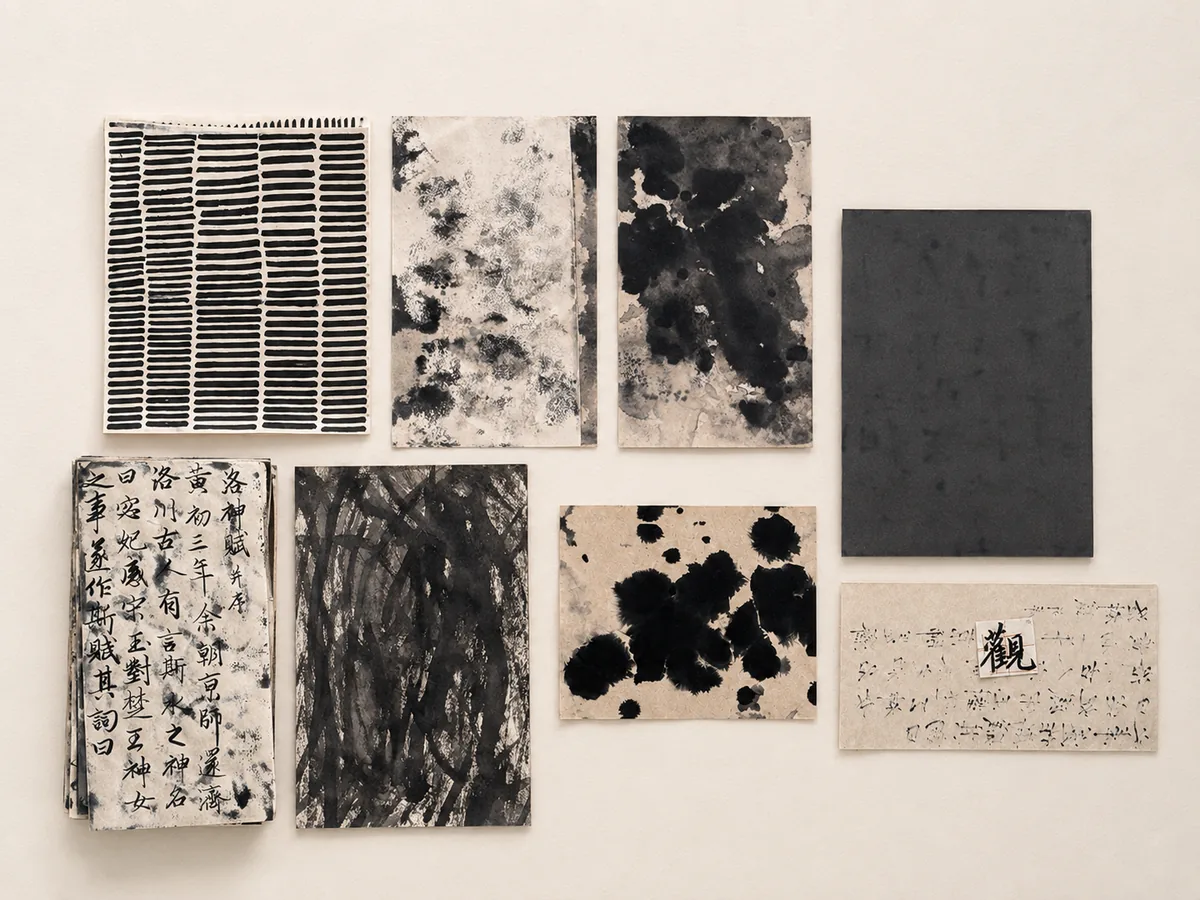
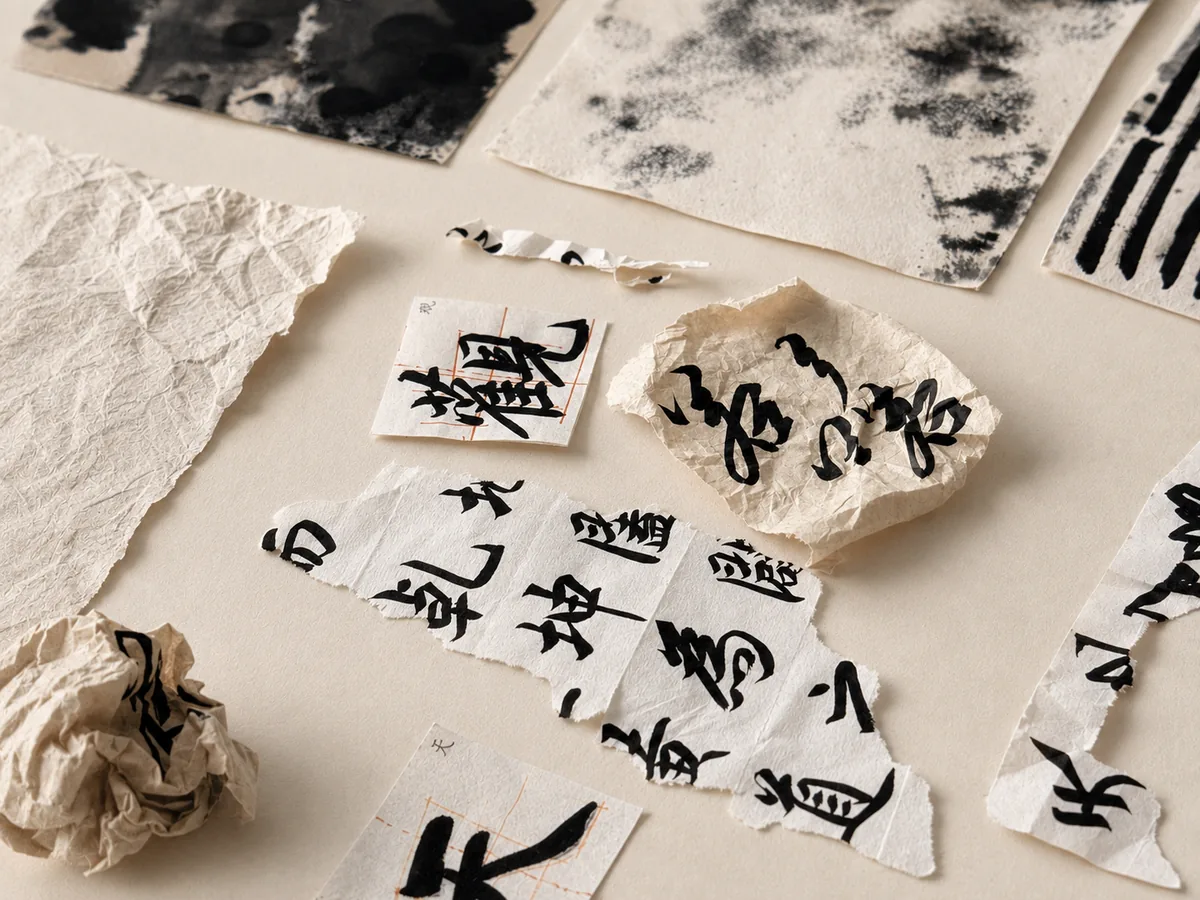
I began to reconsider the discarded sheets produced during learning. Their repetitions, mistakes, corrections, and changes in pressure recorded not simply what I had written, but how the body had learned. By cutting, enlarging, layering, and reassembling these materials, writing shifted from language into line, density, texture, and surface.
Learning Path
Body before concept
The project follows the order in which the question emerged: physical learning first, reflection afterwards. What began as an attempt to keep practice papers gradually became a study of how the body is trained through repetition and how material preserves actions that have already taken place.
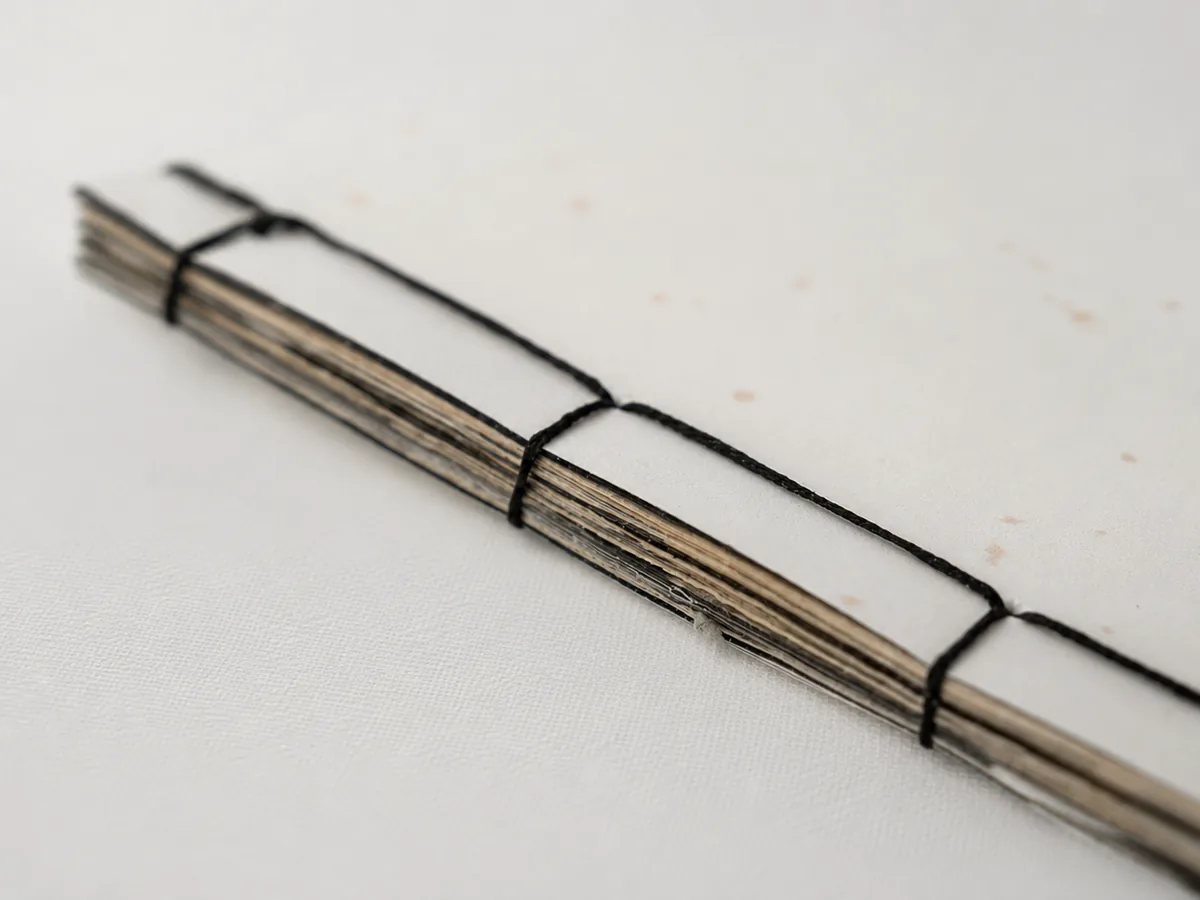
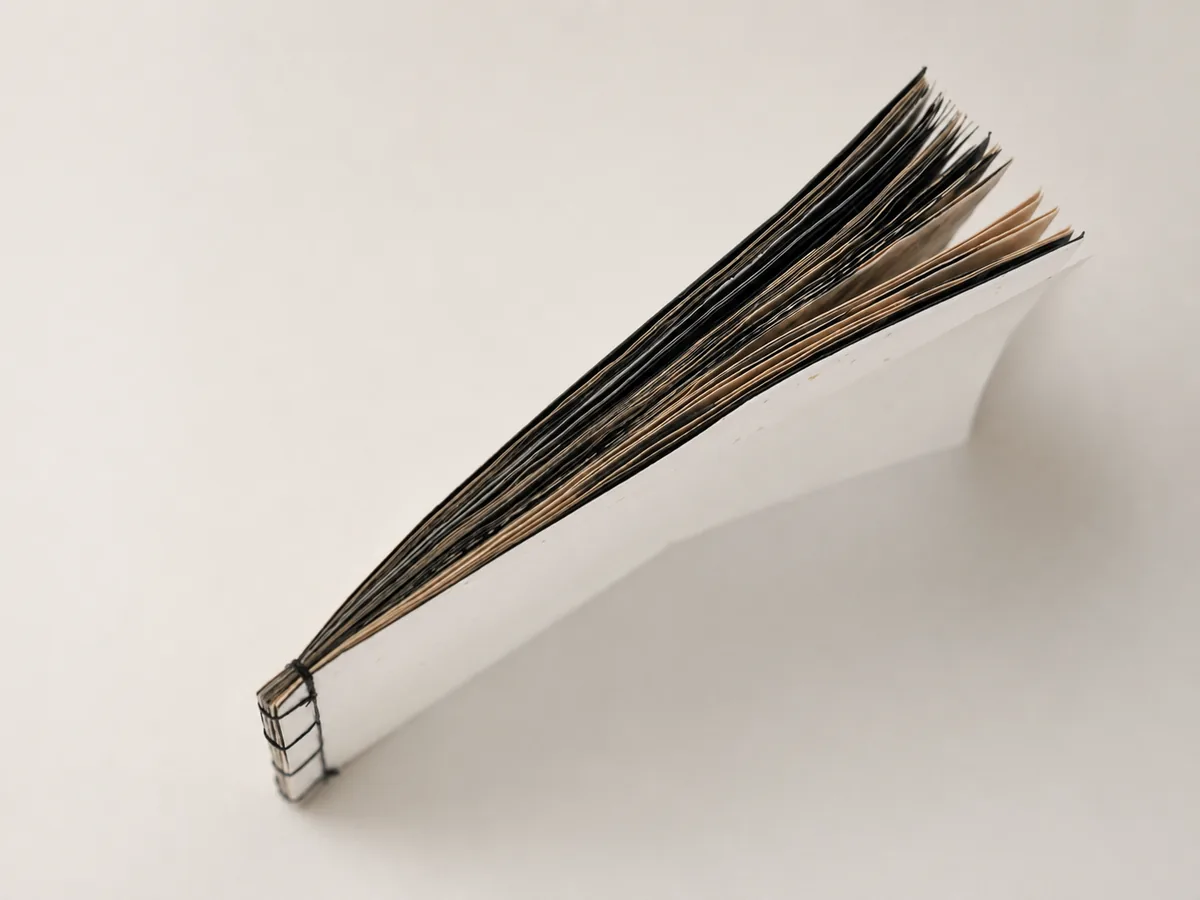
Cutting, magnifying, layering, sequencing, and binding do not just display results; they transform how movement memory is made readable through material order.
Book Documentation / 01
Book Object
Book Documentation / 02
Interior Sequence
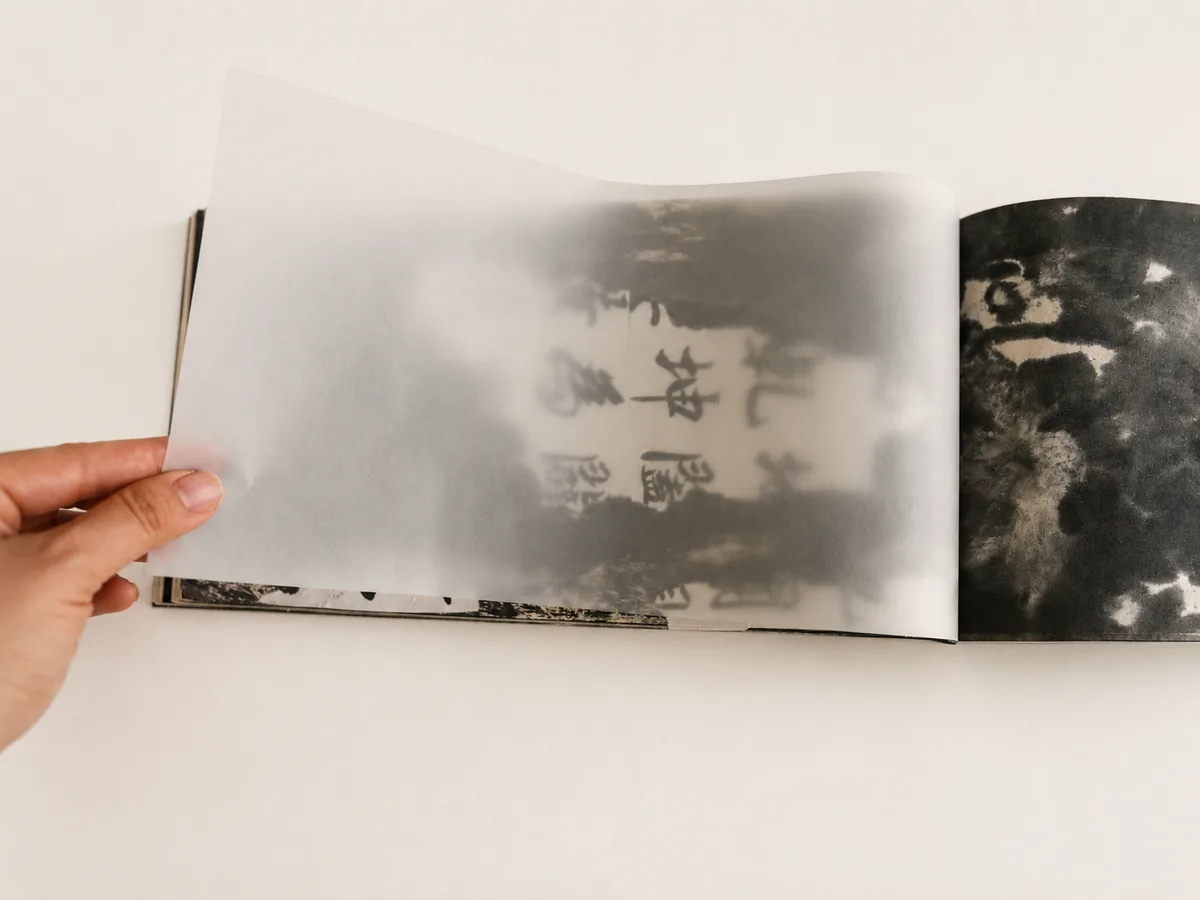
Book Documentation / 03
Detail
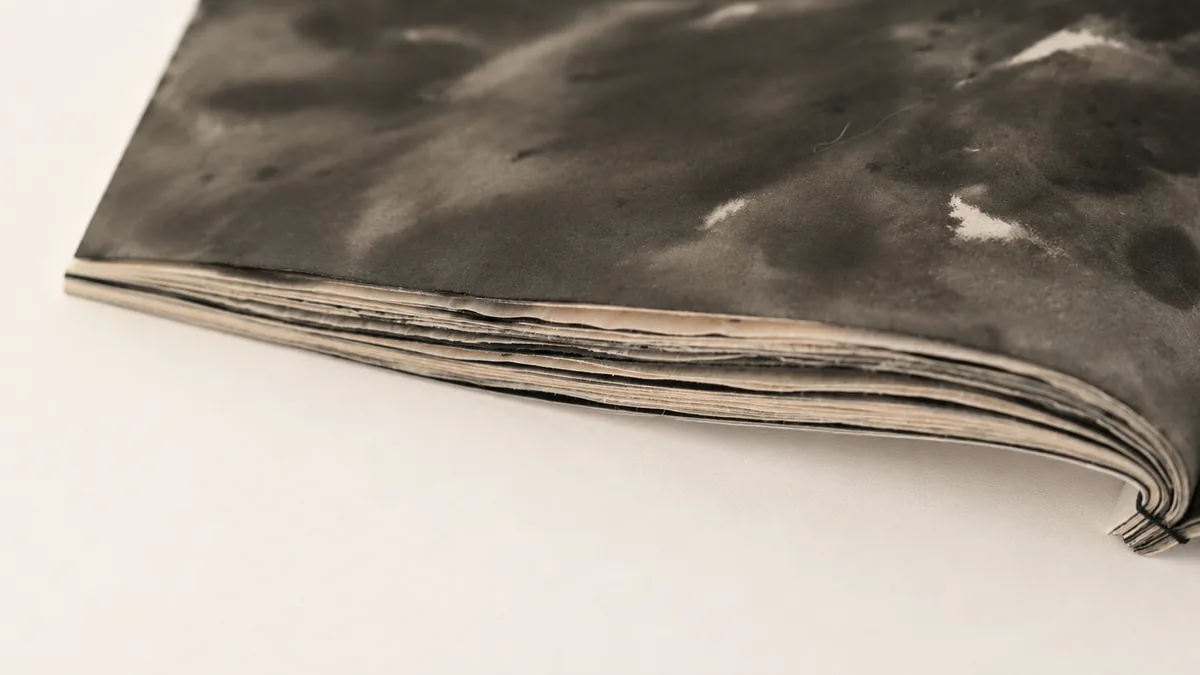
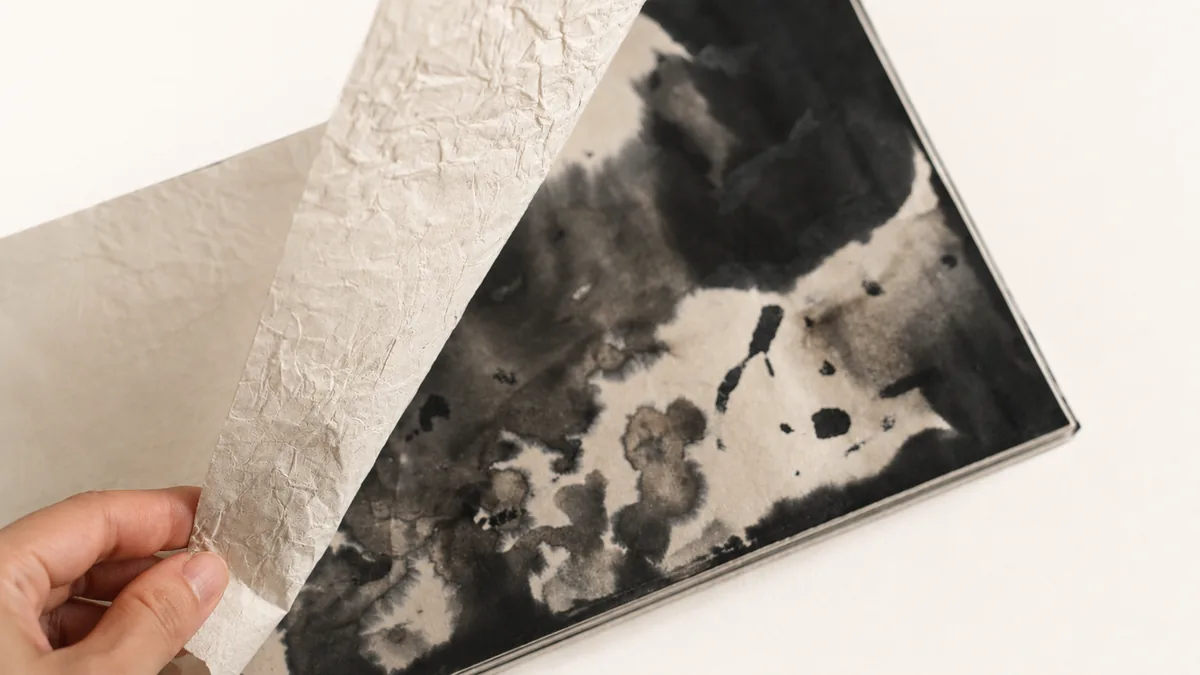
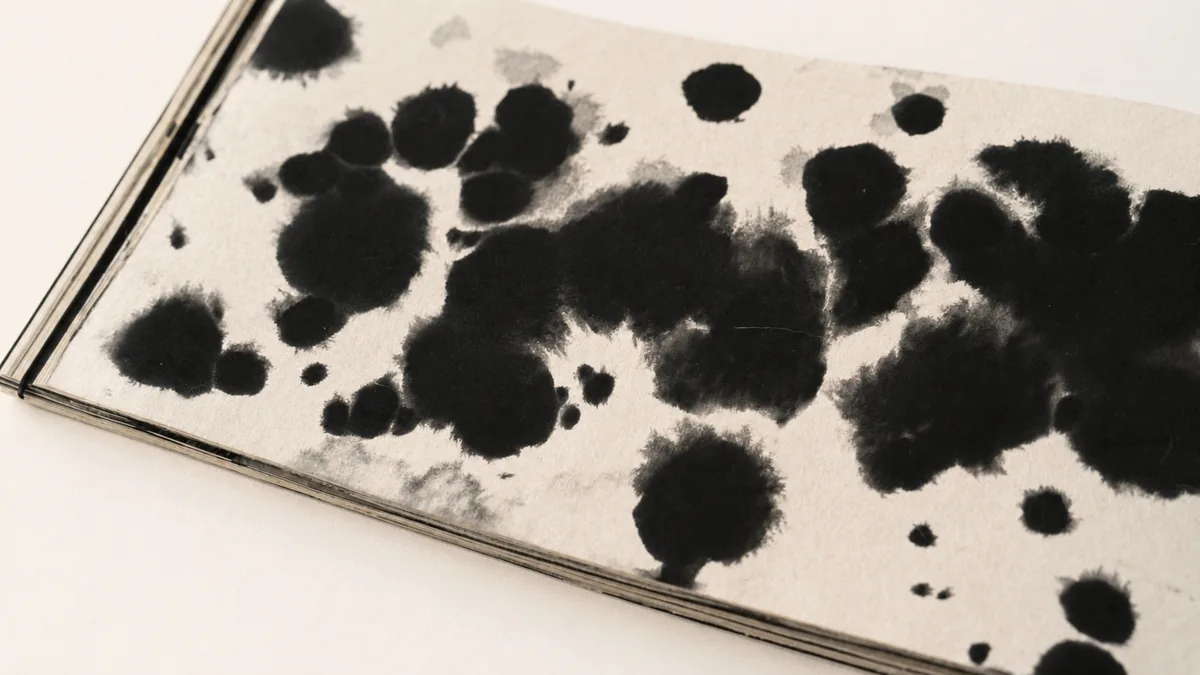
Book Documentation / 04
Book in Motion
Book Documentation / 05
Making Process
Experiment / 02
Pilot in developmentMachine Reading the Line
A computational extension of Skin of Writing: static traces are read as pixels and geometry, then checked against moving-image evidence and the artist’s embodied account.
Why Machine and Video are Used
Temporal separation, not replacement
Moving-image analysis and geometric reading are added after the object exists. They separate the final surface from the writing event and help mark what is not directly visible.
They remain tools for annotation, not the sole standard of artistic or calligraphic judgment.
Research Question / Computational Translation
How Does a Machine Understand a Line?
Rather than generating new images, the experiment asks what remains legible—and what is lost—when an embodied trace is reduced to pixels, edges, and geometry.
Does a computationally recognised line correspond to the action remembered by the body?
- 01Verified traceAuthorship, learning stage, and source conditions
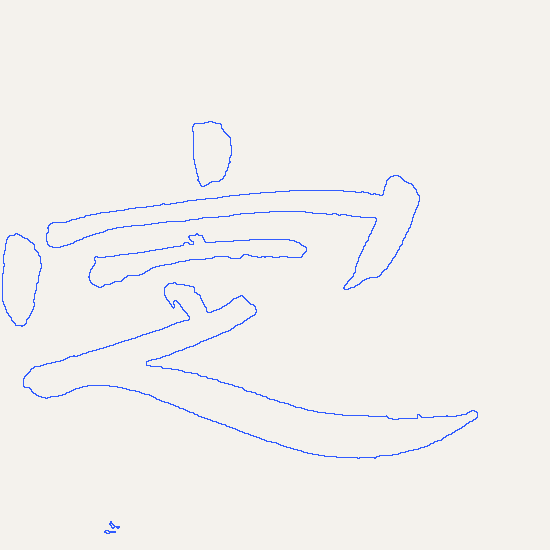
- 02Static image descriptionThreshold, edge, skeleton, endpoint, and junction
- 03Temporal comparisonA continues · B stops · C returns
- 04Embodied interpretationThe writer distinguishes composure, broken qi, and retracing
Evidence rule A scan enters the study only after its authorship, learning stage, and scanning conditions have been verified.
01 / Static Surface Reading
What can a machine describe after bodily time has become a finished surface?
Two verified practice traces establish the first limit: image geometry can describe fragmentation, overlap, and topology, but it cannot reconstruct the continuity of the writing body.
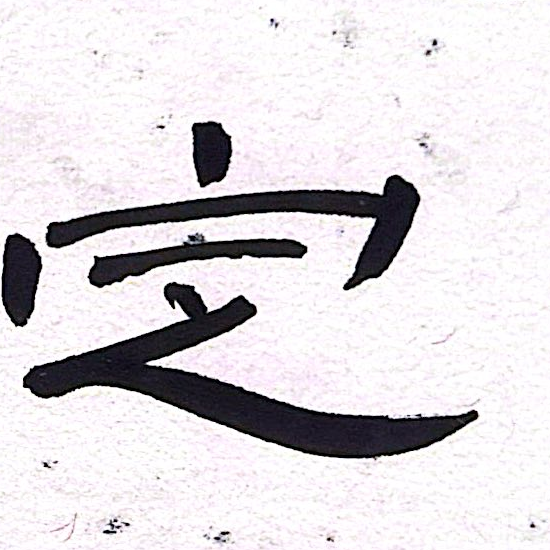
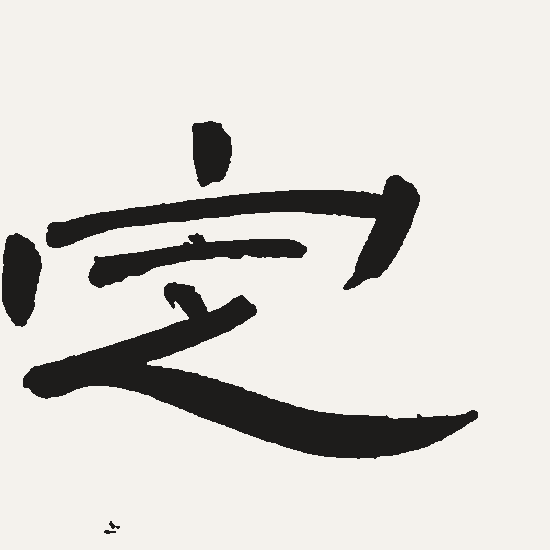
Pilot Case 01 / zhi
A line can look hesitant without having been written hesitantly.
- Source
- Self-written Cao Quan Stele clerical-script practice; studying cantou yanwei (“silkworm head and wild-goose tail”)
- Status
- Authorship and embodied account verified by the artist
- Machine / M
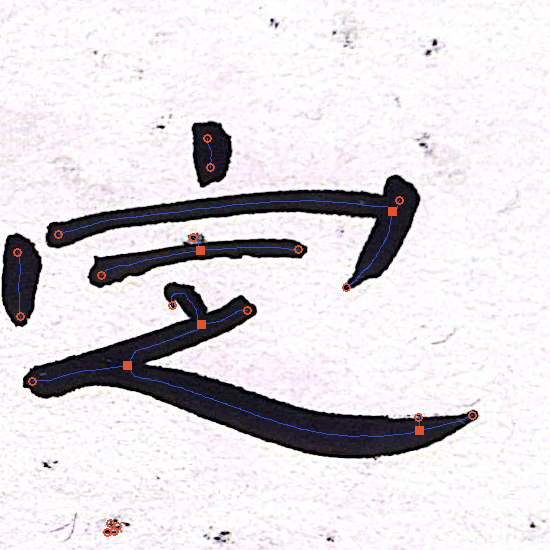
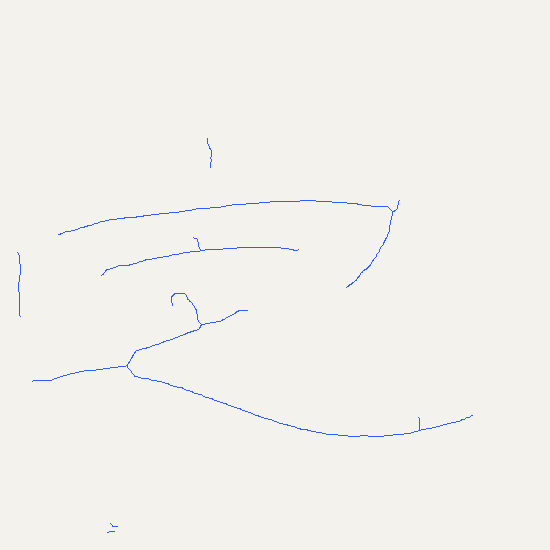
- The blue centreline preserves direction and connection after the changing weight of the brush has been removed.
- Body / B
- The lower sweep is remembered as a quick, continuous movement within a longer sequence of writing.
- Error / E
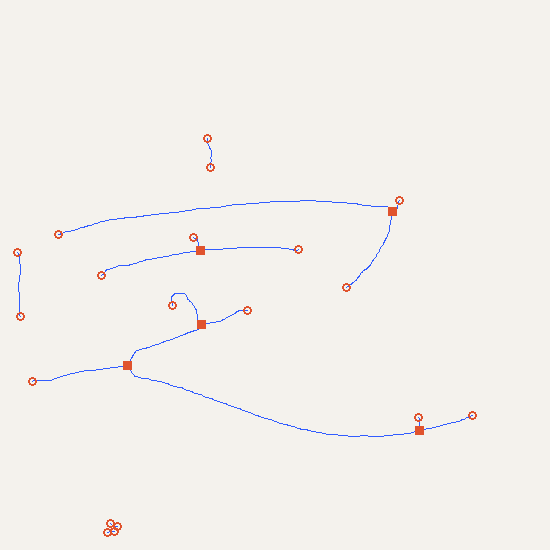
- A detected endpoint describes image geometry; it does not prove that the hand stopped or hesitated there.
Artist / Embodied account
I wrote this as part of a continuous sequence of Cao Quan Stele practice. The movement was quick, with almost no pause. The character felt light and structurally floating; after writing, I felt it lacked the weight of the original stele.
Machine / Static account
After thresholding and skeletonisation, the image produces 19 endpoint clusters and 5 junction clusters. Foreground and skeleton pixel totals remain in the method metadata because they vary with crop, resolution, and threshold; they are not treated as calligraphic findings.
Error annotation / 01
Fragmentation is not hesitation. An irregular edge or detected endpoint may suggest interruption to a machine, while the remembered action was rapid and continuous.
Pilot Case 02 / Control
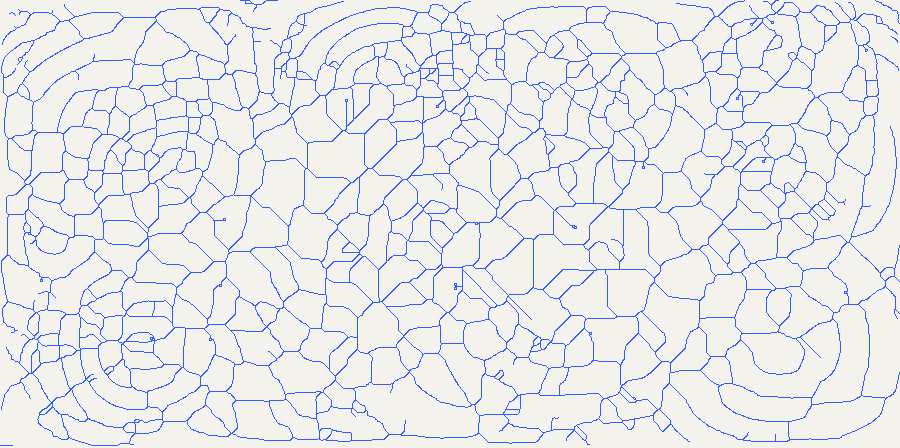
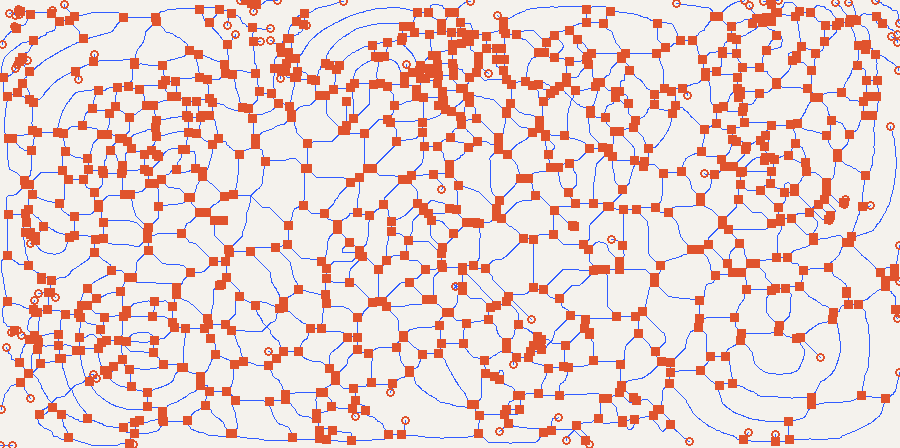
A complex topology can come from one continuous exercise.
- Source
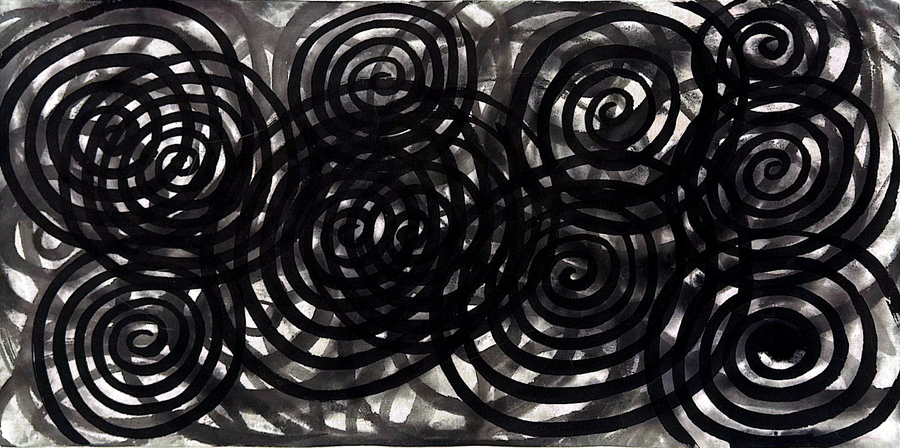
- Self-drawn continuous spiral—or “mosquito coil”—brush-control exercise
- Aim
- Equal spacing, circular movement, repetition, and control of turning strokes
Artist / Embodied account
I drew the circles continuously, one after another, allowing them to overlap. I tried to keep the distance between each ring equal. The exercise trained brush control for circular movement, turns, and strokes such as pie and na.
Machine / Static account
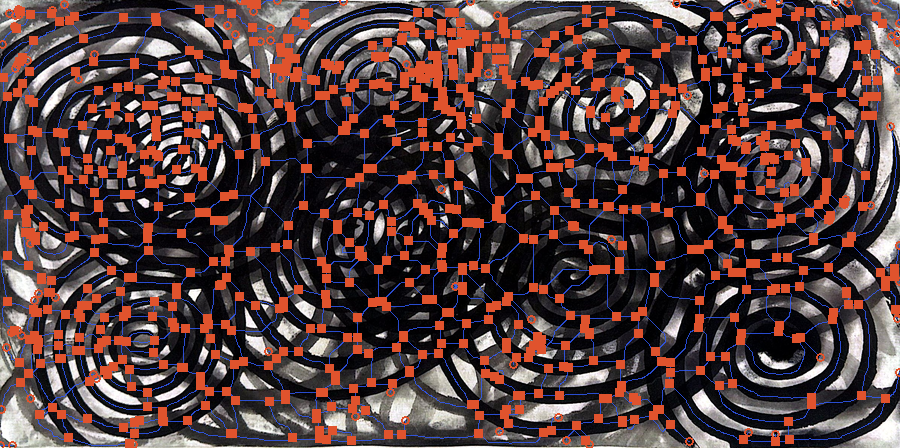
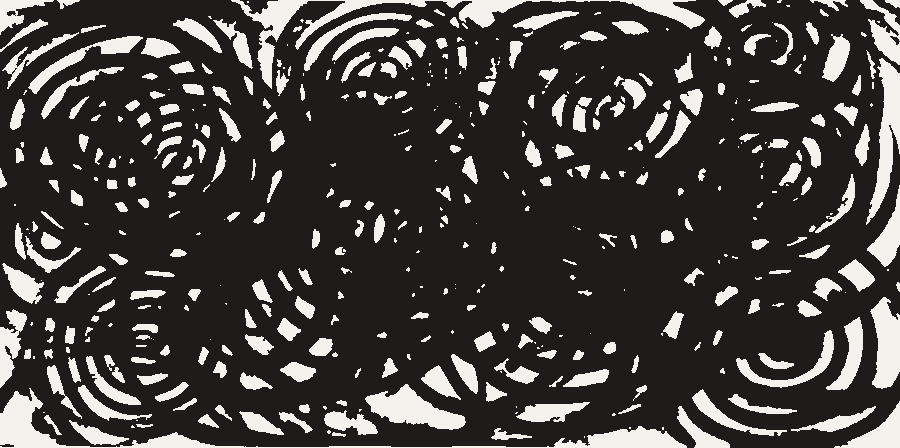
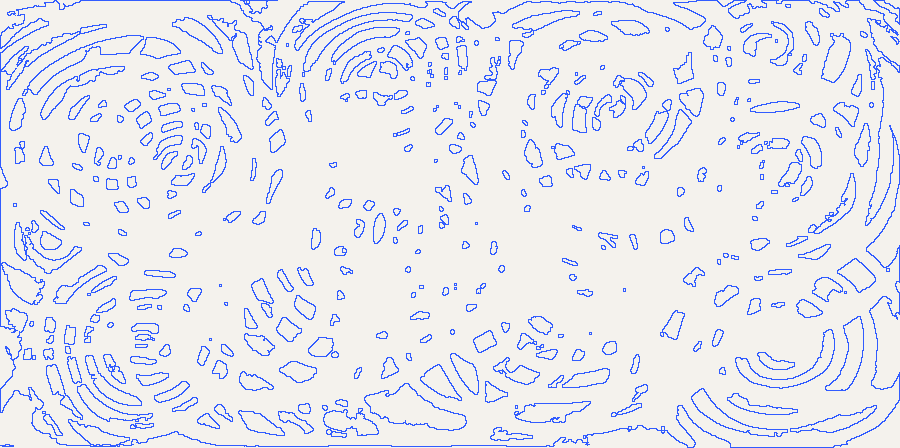
The dense overlaps produce 85 endpoint clusters and 929 junction clusters after thresholding and skeletonisation. The count describes this particular crop and processing setup; it does not count bodily decisions or interruptions.
Error annotation / 02
Complex topology is not complex action. The machine reads overlaps as hundreds of structural events, while the exercise was experienced as sustained repetition and continuous control.
02 / Temporal Intervention
Continuity, interruption, and return
- Source
- Three fixed overhead recordings of the same character, written by the artist
- Conditions
- A / natural continuity · B / imposed stop · C / deliberate retracing
The study therefore turns from finished geometry to recorded action: A continues, B is forced to stop, and C returns to an already completed trace.
Video and image processing can locate motion, stillness, density, and spatial return.
The completed character collapses continuing, stopping, and returning into one material image.
The writer distinguishes composure, broken qi, and the taboo of retracing.
A/B/C Temporal Reader
Three instructions produce three different relations to writing time.
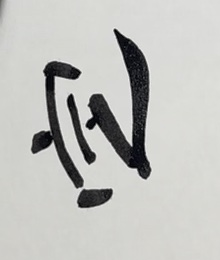
The instruction inserts stops into the writing sequence. Their bodily meaning is not contained in the final shape.
Shaded intervals mark approximate low-motion regions observed in Take B. They locate visible stillness; they do not identify qi.
The recording can locate intervals of reduced visible movement and subsequent restart.
Continuing afterwards does not feel like breathing through a natural transition; it feels like beginning again.
The system measures an event. The writer supplies its calligraphic and bodily meaning.
C / Verified Return Sequence
Can a machine distinguish one weighted stroke from a trace accumulated through return?
By approximately 27.0 seconds, the main form is already visible. From about 28.0 seconds, the brush re-enters previously marked regions. Video can verify that return; only the writer can explain why retracing is taboo in calligraphic practice and why the result feels heavy, rigid, and lifeless.
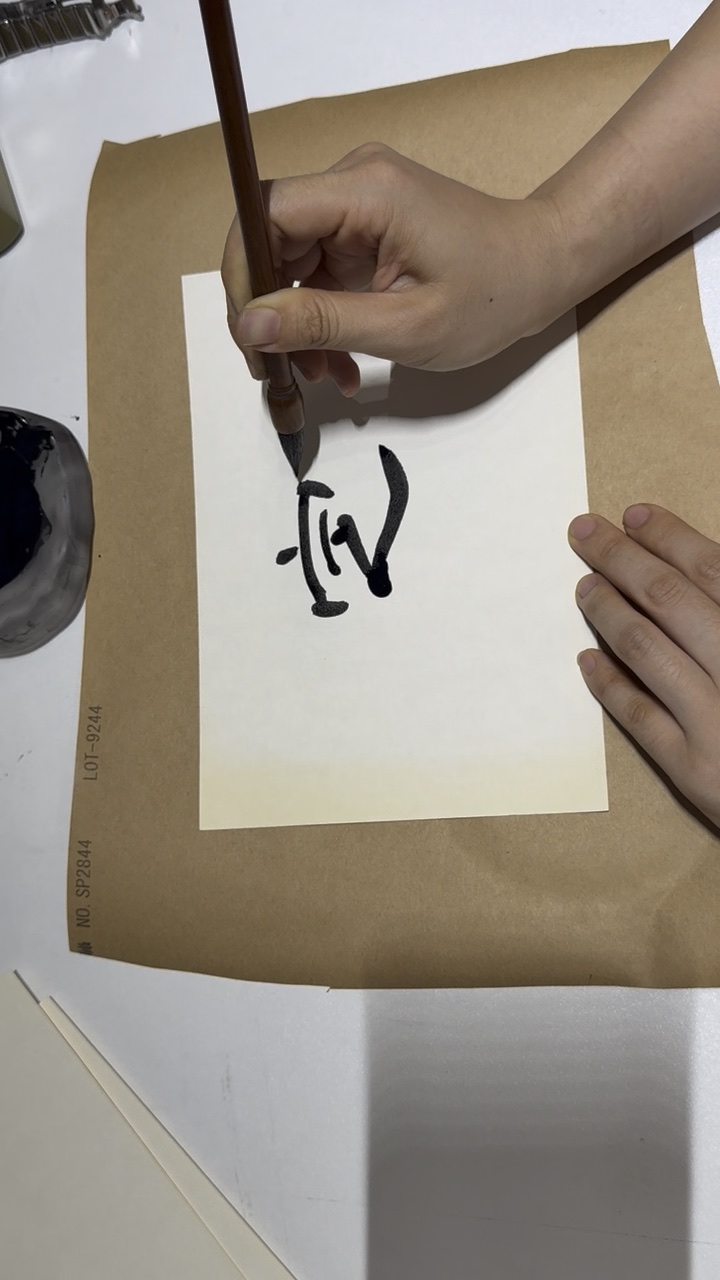
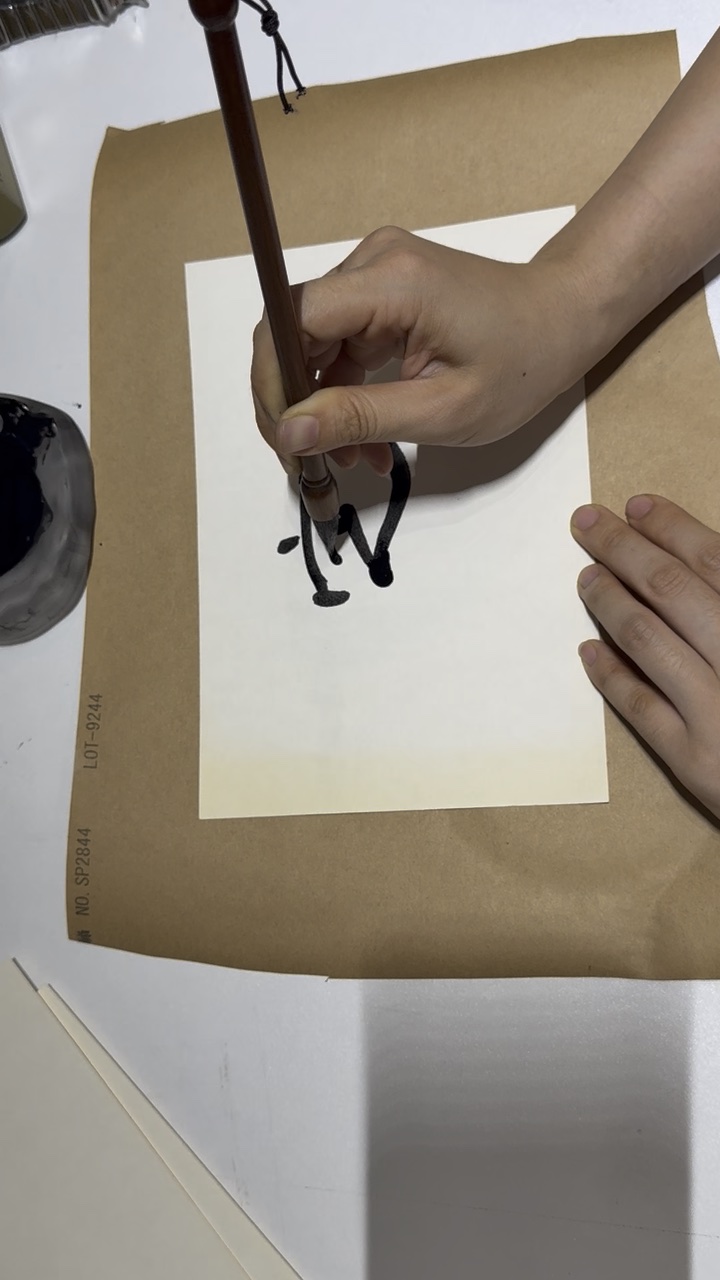
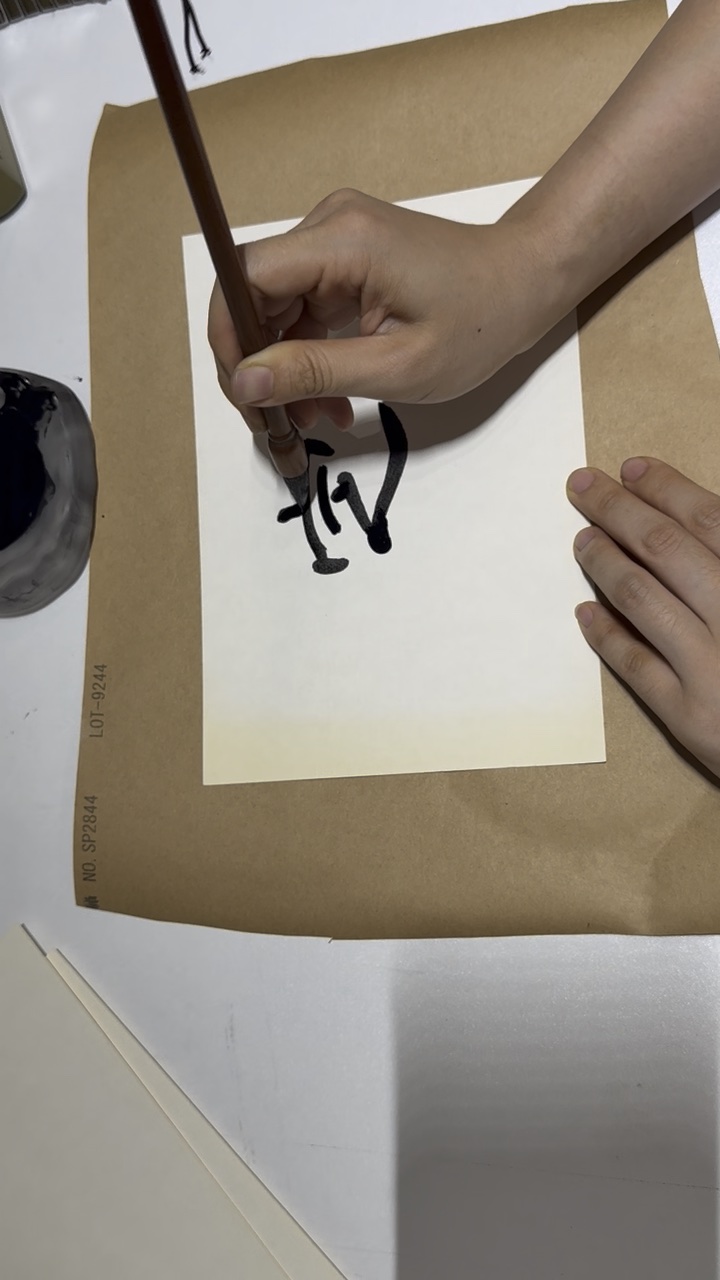
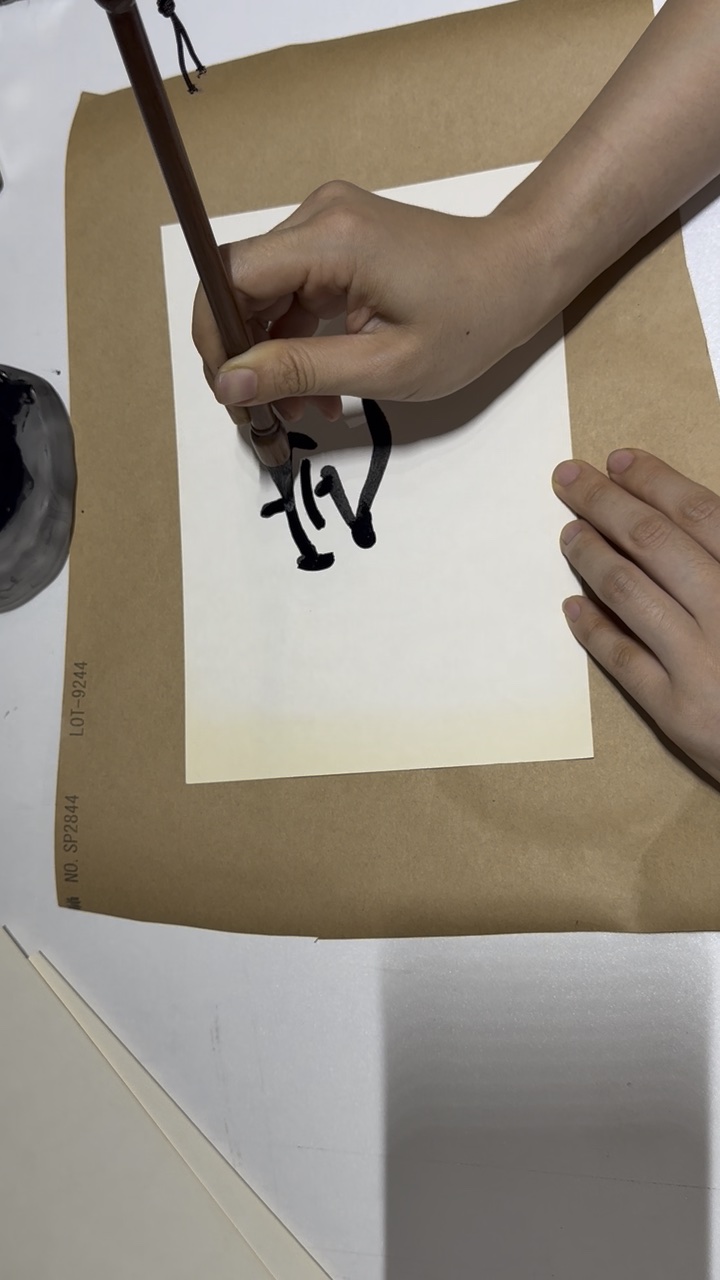
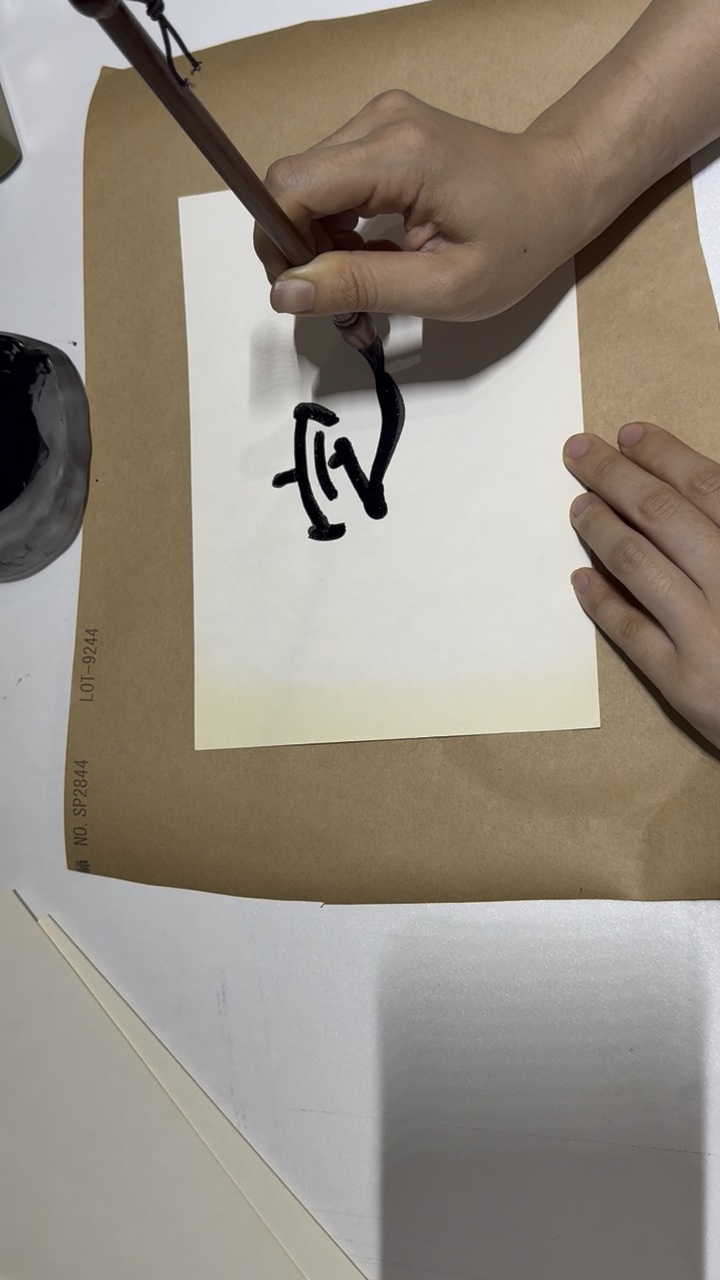
A continues, B stops, and C returns. Machine-readable events do not contain their calligraphic meaning: zero motion is not broken qi, and detected return is not knowledge of why retracing is taboo.
Evidence trail
One documented chain: Take C in temporal sequence + static outcome
Input
Recorded writing event
Take C was recorded in one continuous sequence. In this same sequence, the main form becomes visible around 27.01 s.
Return starts at approximately 28.01 s and continues through final states at 31.98–40.94 s.
Machine step
Geometric extraction applied to the final frame
The final frame is processed through threshold, edge, skeleton, and feature mapping to isolate endpoint and junction structure.
For this sample, the final structure reports 9 endpoint clusters and 5 junction clusters.
Machine output
Static trace only, time lost
Geometry confirms a darker, overlapping area in the finished form and the return/rework event, but it is collapsed into the same endpoint/junction structure.
This corresponds to the A / B / C comparison row below, used as a pilot proxy for visual convergence.
Artist annotation
Body knowledge that remains outside the image
The writer reads this trajectory as “return after completion” rather than one continuous formative stroke. That shift explains why the character is experienced as heavy and rigid.
Machine output cannot classify this as a failure of technique or a value judgment by itself.
Conclusion
What is shown, and what is not
Shown in this pilot sample: the same final image surface can hide distinct temporal structures.
Not established: intention, pressure profile, or calligraphic quality ranking.
03 / Evidence Boundary
Different actions can converge in similar static descriptions
| Case | Machine description | Time / body evidence | Interpretive gap |
|---|---|---|---|
| 01 / zhi | 19 endpoint clusters 5 junction clusters |
Quick sequence Almost no pause |
Fragmentation is not hesitation |
| 02 / Control | 85 endpoint clusters 929 junction clusters |
Continuous circles Equal-spacing practice |
Complex topology is not complex action |
| 03 / A · B · C | A 11 / 3 B 11 / 3 C 9 / 5 endpoints / junctions |
A: settled and fast B: imposed stop breaks continuity C: return accumulates inside the trace |
Similar static counts do not establish similar action |
Data status. A / B / C figures are from final-frame crops rather than matched scan controls. This is a pilot observation only: the representation exposes a specific limitation in separating temporal action, not a claim of statistical calligraphic quality.
Observed
What can be measured
Edge, width, direction, curvature, junction, endpoint, greyscale, density, recorded duration, lift, and return.
Inferred
What can only be proposed
Possible pressure change, overlap, correction, accumulation, and deviation.
Requires context
What pixels alone cannot establish
The action that caused a visual quality, felt qi kou, intention, composure, or why the writer experiences a character as alive, heavy, or rigid.
Pilot scope: one artist, one character family, and three controlled temporal instructions. Interpretive analysis remains provisional and depends on the writer’s embodied account.