CURRENT PRACTICE / 01
AFTER USE
COLLECTED COMMERCIAL PAPER / ARTWORKS AND ONGOING INQUIRY
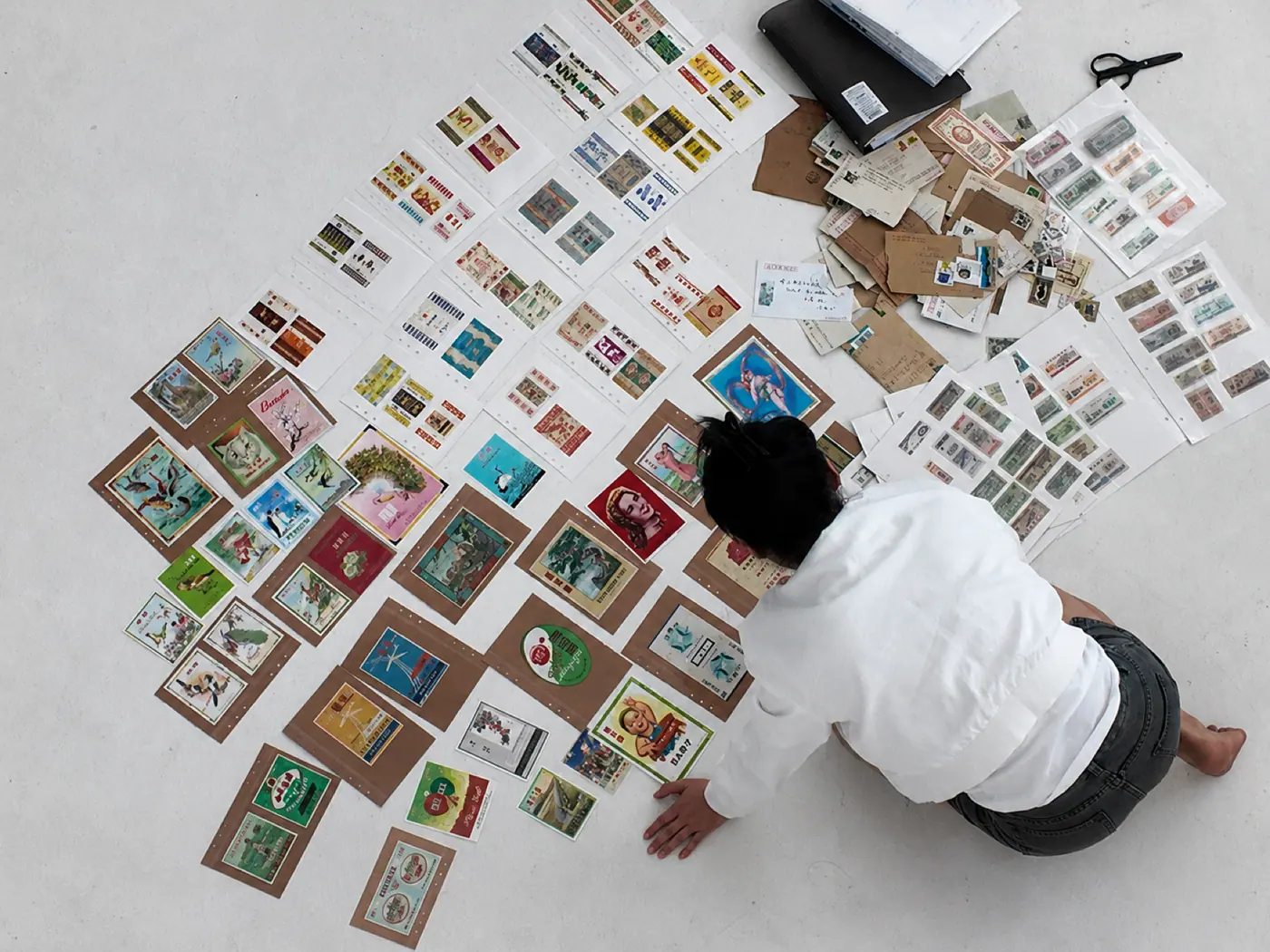
A broader practice developing contemporary works from collected packaging, wrappers, labels, tickets and related printed matter through comparison, grouping and remaking.
I do not treat collected paper as historical proof. I use it to develop material encounters in which evidence, association and uncertainty can remain visible.
Project
Scope and current direction
After Use is the wider artistic exploration. It begins with commercial paper encountered through second-hand markets and personal collecting, without assuming that the materials belong to one period, one system or one recoverable history.
Within that wider practice, the current research proposal focuses more narrowly on commercial packaging, wrappers and paper labels. The Bureau of Invalidated Tickets is a distinct archive and interface subproject retained as an earlier experiment, rather than a name for the whole practice.
AFTER USE / SYSTEM OVERVIEW
Artist-guided reading & reorganisation
Material evidence · machine suggestions · artist judgement
Material & digital records
Objects · images · identifiers · source context
Machine reading
OCR · 38-dimensional visual features · provisional grouping
Review record
Transcription · grouping · uncertainty
Artist review
Compare with the physical object and documented sources. Confirm, correct or leave pending.
rerun needed?
↶ Yes / controlled rerunReturn one artist-selected parameter to machine reading
↻ No / review updated recordReturn to artist review; inspect and reconsider
01
2026 ARCHIVE PILOT
Earlier broader field
Retained as a research record
The Bureau of Invalidated Tickets began as a distinct 2026 archive of tickets, vouchers and other printed matter found through street bookstalls, online markets and collector networks. It tested whether scanning and machine-assisted comparison could support material observation.
This material remains available as a working record, not as a recovered historical taxonomy and not as the whole of After Use. The current research proposal works with a narrower set of commercial packaging, wrappers and paper labels, where source research and physical remaking guide the next stage.
02
ARTIST-ORGANISED ARCHIVE
Before machine reading
Situated classification
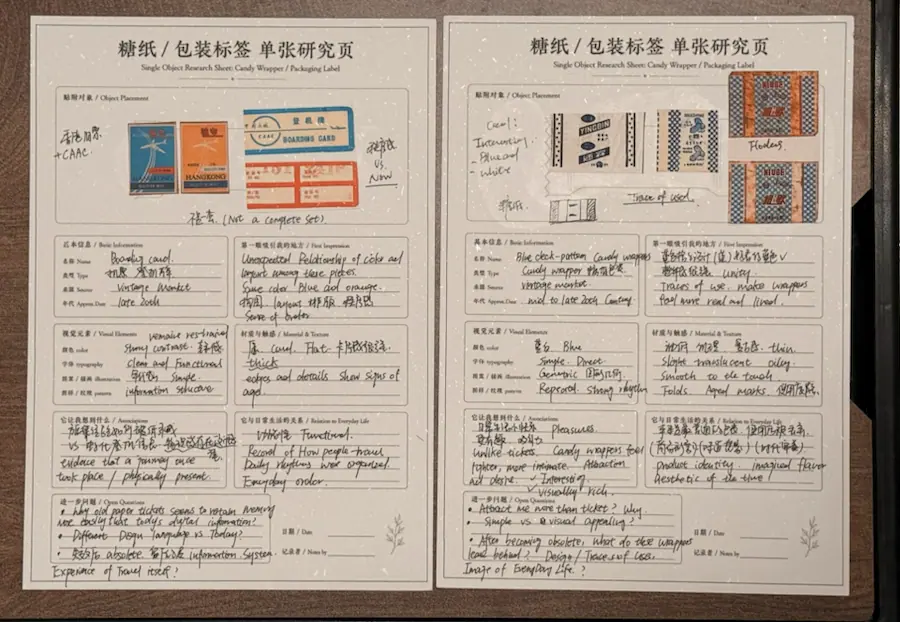
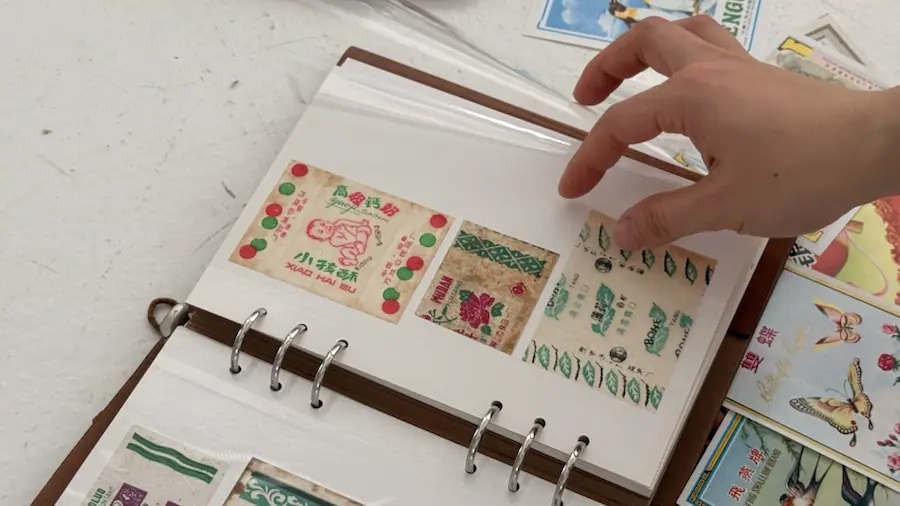
The materials were already being sorted, compared and interpreted before they became digital records. From the beginning, sugar wrappers and tickets were kept as two distinct material systems in different physical and notational groupings. Tickets were read through exchange, qualification and institutional identity; grain coupons through region; wrappers through colour, attraction, accumulation and desire. These are situated artistic classifications rather than a recovered historical taxonomy.
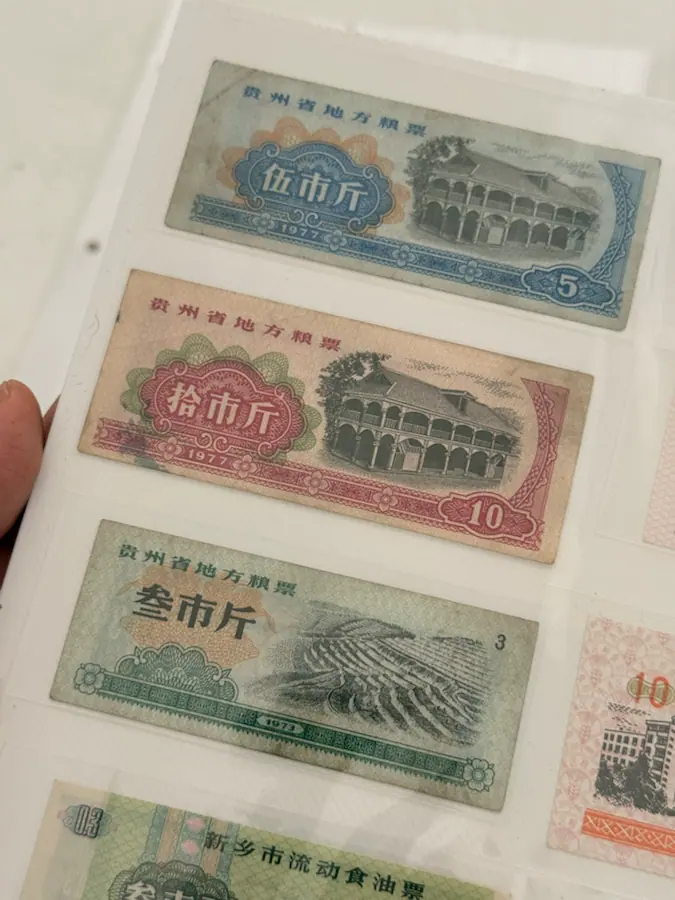
Artist grouping / Regulated access and exchange
Eligibility, quantity and allocation
Ration coupons and exchange vouchers organised who could obtain what, how much, where and when. Group reading makes their explicit conditions, regional differences, repetition and traces of handling available for comparison.
Eligibility · Quantity · Location · Time · Allocation · Exchange
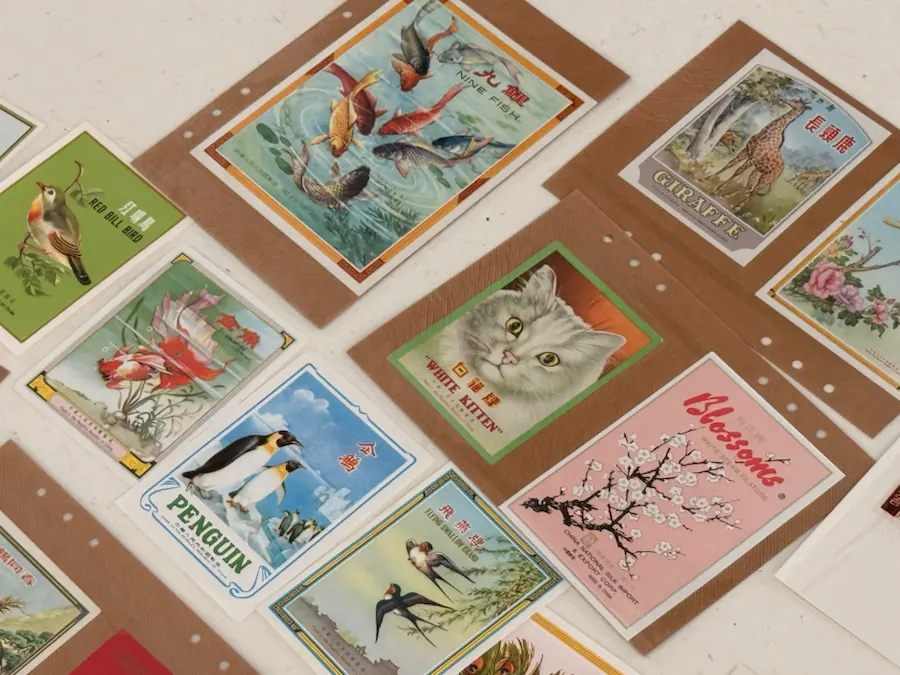
Artist grouping / Commodity image and value
Recognition, attraction and value
Wrappers and labels participated in naming, recognition, attraction, perceived authenticity and commodity value. Single-object reading keeps colour, typography, printed image and handling trace available without reducing them to visual similarity alone.
Naming · Recognition · Attraction · Authenticity · Commodity value
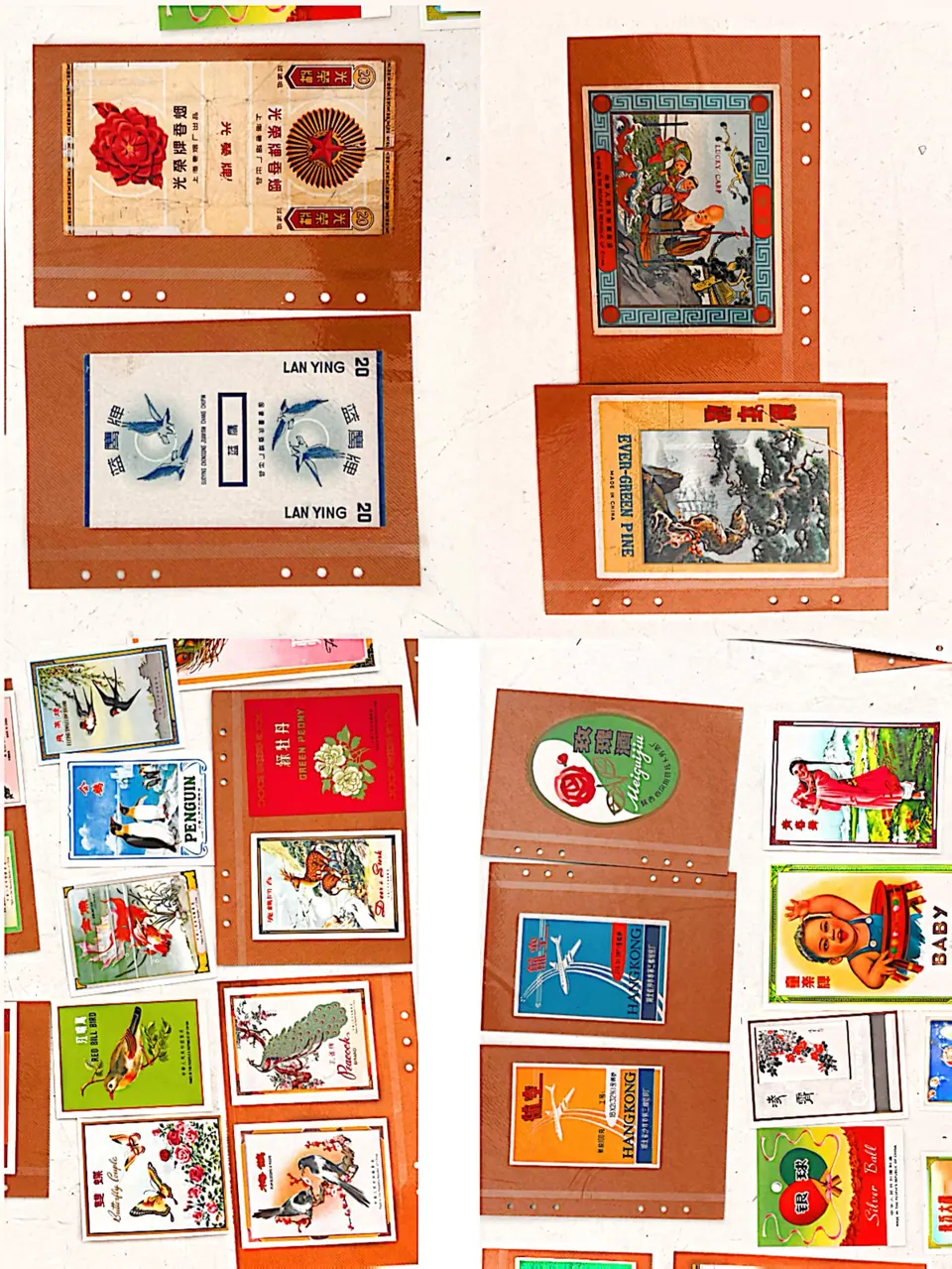
Peripheral material / Awaiting entry
Held at the edge of the corpus
Matchbox prints, cigarette packaging, stamps and other printed matter remain visible in the working archive without becoming a third equal category. They enter the core corpus only when provenance and analysis show that they extend the research question.
Retained · Unresolved · Awaiting provenance · Conditional entry
FROM PHYSICAL OBJECTS TO DIGITAL RECORDS
The first digital translation does not coincide with the physical archive.
An artist-led inventory identified 318 distinct physical objects after initial system-level separation, then checked them for duplication. The present web archive contains 296 candidate digital crop records produced through a mixed computational and manually adjusted extraction workflow. A digital record may merge several objects, omit an object boundary or preserve a scan condition rather than one independently verified object.
- 318
- Distinct physical objects · artist count
- 296
- Candidate digital crop records
- 185
- Ticket-and-voucher records in Run 01
- 20
- Draft comparisons awaiting artist validation
Object–record correspondence / under reconciliation
Inspect the 296-record working archive03
WHEN ONE SYSTEM READS ANOTHER
Machine error
Diagnostic evidence
An obsolete administrative system is being read again by a contemporary computational system.
Machine classifications, omissions and misreadings are retained as diagnostic evidence rather than treated as corrected catalogue truth. They reveal which visual and textual properties become computable, which material relations disappear and where a new record is reconstructed by the reading process itself.
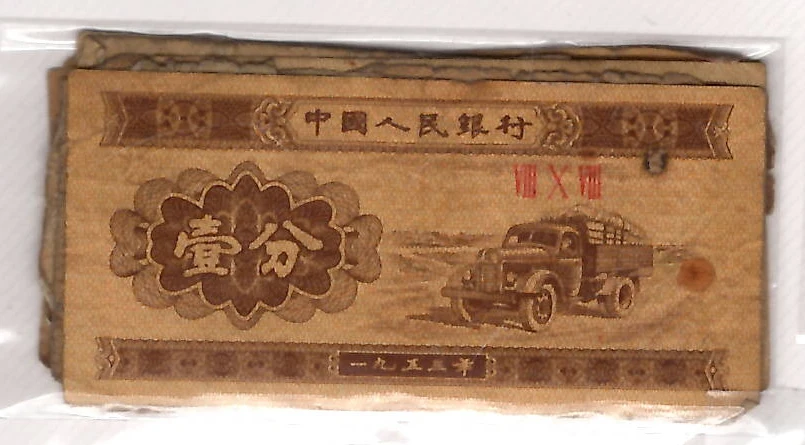
One sleeve, fourteen one-fen banknotes.
The artist confirmed that this physical sleeve contains 14 one-fen banknotes marked 1953. The notes were already held together in the same bag; the digital crop represented the stacked set as one candidate record.
The record preserves the appearance of a layered group but collapses fourteen physical items into one digital unit. This segmentation decision precedes later OCR or grouping.
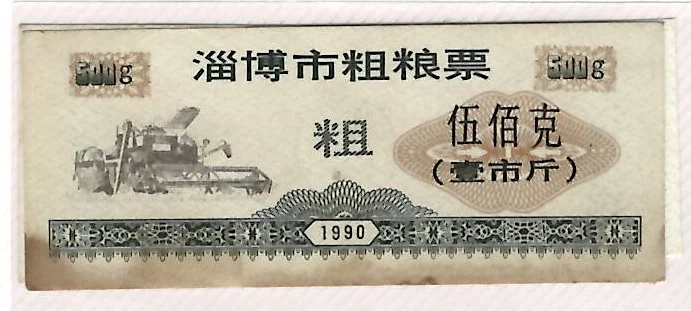
A plausible character breaks the unit.
Relatively high OCR confidence does not prevent 市斤 from becoming 市厅.
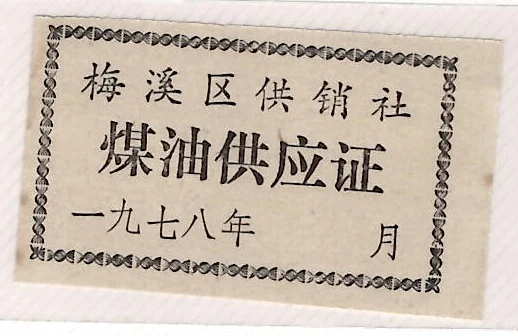
The label is read; the blank is lost.
OCR detects 月 but not the meaningful condition that no month was entered.
RUN 01 + RUN 02 / MACHINE CHAIN COMPLETE · ARTIST VALIDATION ONGOING
A fixed diagnostic subset tests where readings fail to coincide.
Run 01 and Run 02 processed the same 185 candidate ticket-and-voucher records drawn from the wider 296-record working archive. Run 02 changes only the cluster rule (fixed k=6), so this is a staged, controlled readout chain rather than a finished factual catalogue.
Run chain status
- 01 Completed: same fixed input (185 published food records) + baseline pipeline.
- 02 Completed: Run 02 (single-variable change, fixed k=6).
- 03 Planned: Run 03 with one additional controlled change.
RUN 01 / 02 / 03 LOOKUP
Where to find each layer now
Use this as the project map before touching new code
The web already separates three evidential layers for one fixed 185-record input; that is the method statement, not a finished catalogue.
Layer 01 · Fixed run evidence (Run 01)
Output evidence lives in RUN-01-MACHINE-ASSISTED-DIAGNOSTIC-READING.md and machine_reading_records.json. It states exactly what was computed, how many inputs, how many fixed outputs, and where uncertainty remains.
Layer 02 · Human comparison subset (20)
Bounded comparison artefacts are selection.json, manual_visual_review.json, human_machine_comparison.csv.
Layer 03 · Browser payloads (what you are seeing)
Interface data is generated in machine-reading-preview-data.js, machine-reading-corpus-data.js, and machine-reading-network-data.js.
Run 02 is complete (fixed-k=6). Next action is Run 03: keep this same 185-input set and change one new variable only.
04
NETWORK INTERFACE
Artist-directed
Code-assisted prototype
The network is a curated interface for navigating evidence layers and provisional relations. It is not an automatically discovered knowledge graph. Relation terms, featured examples, information density and interaction behaviour were developed through an artist-directed, iterative prototyping process.
- Relations
- Eligibility · allocation · exchange · validity · recognition · attraction · value
- Interaction
- Grid and relation views · object-level evidence reading · zoom · drag · object inspection
- Boundary
- Connections remain curated propositions; they do not claim machine-discovered historical meaning
05
PRACTICE EVIDENCE
Process evidence
Duration 02:00
Materials are touched, turned, compared and rearranged. The film records the hand as part of the research method rather than presenting a finished archive.
F–01 / 02:00 / Handling · Grouping · Comparison / Silent research cut
06
CURRENT LIMITS AND NEXT COMPARISON
Phase 01 complete
Research ongoing
Phase 01 is complete as archive construction, web prototyping and a preliminary machine-reading pilot. The research is not complete: the next step is to compare the physical inventory, digital records and computational readings without collapsing their different evidential status.
- 01Reconcile 318 distinct physical objects with 296 candidate digital records.
- 02Validate, correct or reject the 20 draft comparisons through artist-led review.
- 03Keep remaining records in both Run 01 and Run 02 explicitly pending rather than implying completed human review.
- 04Start Run 03 after a single controlled change to the same 185-input set.
- 05Keep Run 01, Run 02 and Run 03 comparison criteria identical so differences are attributable.